
We know nouns are words that represent a person, idea, place, or thing. But what is a possessive noun? Possessive nouns are forms of nouns that represent ownership.
Confused? Let’s explain this to you in detail below, keep reading!
Possessive Noun- What it is
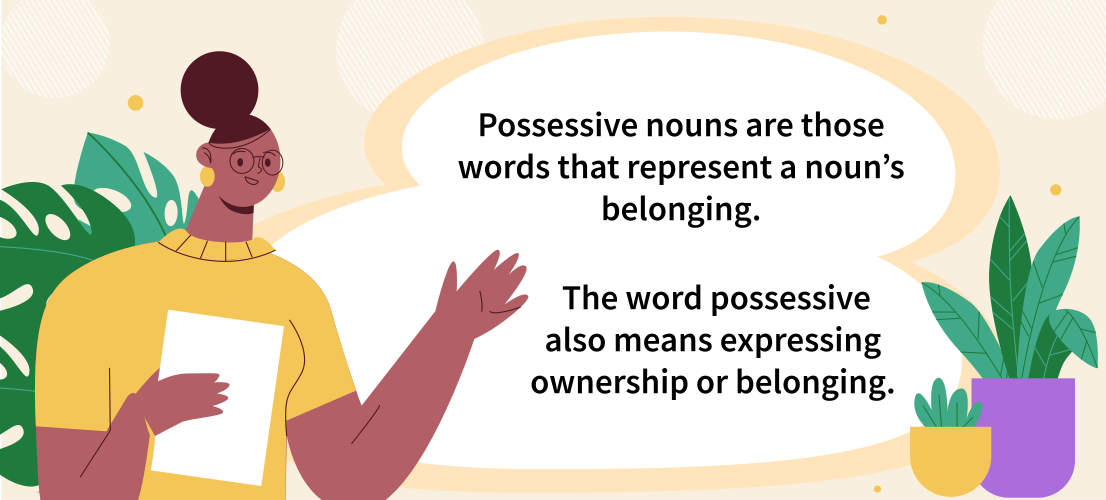
Possessive nouns are those words that represent a noun’s belonging. The word possessive also means expressing ownership or belonging. We know it can be tricky to understand this grammar concept without practice resources. This is why we have published more than 100 workbooks and thousands of printable worksheets to help children grasp grammar concepts easily.
However, it’s time to return our attention to the topic at hand. So, how do we turn a noun into a possessive noun? For example, if we use the noun teacher in a sentence, we could use a possessive noun as follows:
The teacher’s briefcase is in the staff room. Can you bring it for her, please?
Often we have to use different forms of possessive nouns if we include a singular or plural noun in the sentence. In fact, there may a variation in the possessive noun if the plural noun in the sentence ends with an‘s’.
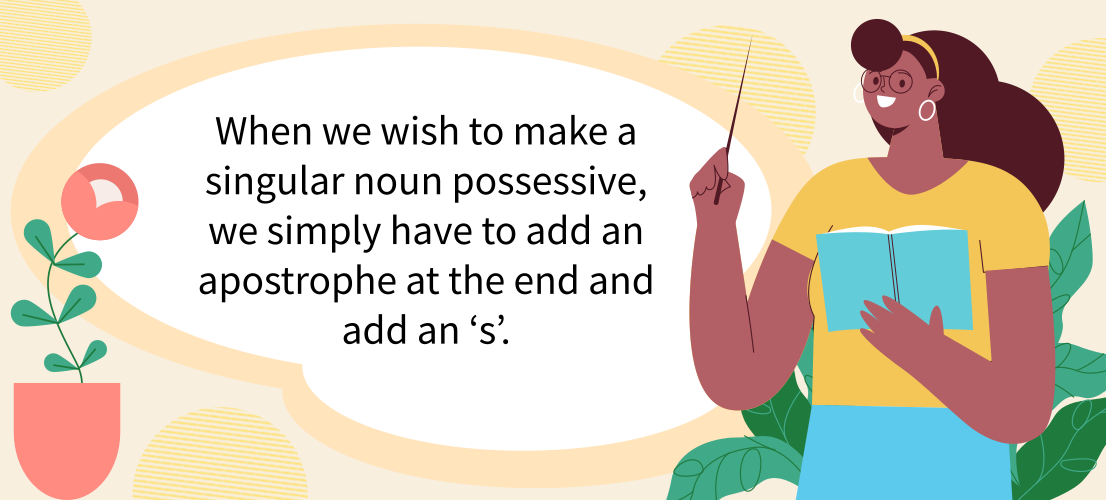
Hence, whenever we wish to make a singular noun possessive, we simply have to add an apostrophe at the end and add an‘s’. Let’s elaborate a bit more on this below.

The ultimate learning platform that every parent needs in a K-8th grade household - to boost scores and confidence!
Monthly


Monthly
Everything is included. Anywhere!$12.99
/month$40.00
$12.99- 3 Days Money Back Guaranteed
- All Updates and Additions
The Role of Apostrophe in Single Nouns
There is one punctuation mark that plays the most concrete role in helping us convert a noun into a possessive noun: Apostrophe. Yes, the apostrophe is a little mark, like a comma in the air, which comes in between or after letters in some words.
Some of the grammatical situations in which you will have to use an apostrophe include possessive nouns and contractions.

Possessive Nouns - Singular
We told you how we can convert single nouns into possessive nouns simply by adding an apostrophe and an‘s’ at the end of it. For example, let’s take brother as a single noun and convert it into a possessive one in the sentence below.
My brother’s surfboard has a hole in it. Let me fix it before he takes it out on the water.
When you’re learning about single possessive nouns, it is likely that the ones ending with an s will confuse you.
Let’s take the example of a horse. When we have to convert this noun into a possessive one, we will refer to it as follows:
The horse’s tail is long, sleek, and beautiful.
Did you see what we did there? Our example above proves that this rule still applies in cases where a singular noun accumulates an extra‘s’ when we make it possessive. You must remember that the same rule will apply for words ending in ‘x’ or ‘z’.
For example, “Ms. Lopez’s concert was a huge success”. Or you could say, “Mr. Delacroix’s ceiling collapsed because of the torrential downpours last night.”
| Singular Possessive Nouns Examples | |||
|---|---|---|---|
| Diabetes's symptom | Gym's rules | Senator's vote | Computer's memory |
| School's schedule | Today's newspaper | Apple's taste | Laundry's smell |
| Mom's pie | Dog's room | John's score | Bird's song |
| Goddess's beauty | Boss's car | Man's word | Mice's cage |
| Cat's tuna | Sun's rays | Apple's taste | Brother's book |
Possessive Nouns - Plural
Our explanation above must have proved how converting simple nouns into possessive nouns is quite straightforward. But when it comes to converting plural nouns into possessive, the process is a little different.
First, it is important to note that most nouns, but not all, require an‘s’ or ‘es’ at the end for becoming plural. For example, glass becomes glasses as plural or book becomes books as plural.
But here comes the slightly different rule for plural possessive nouns ending with s.
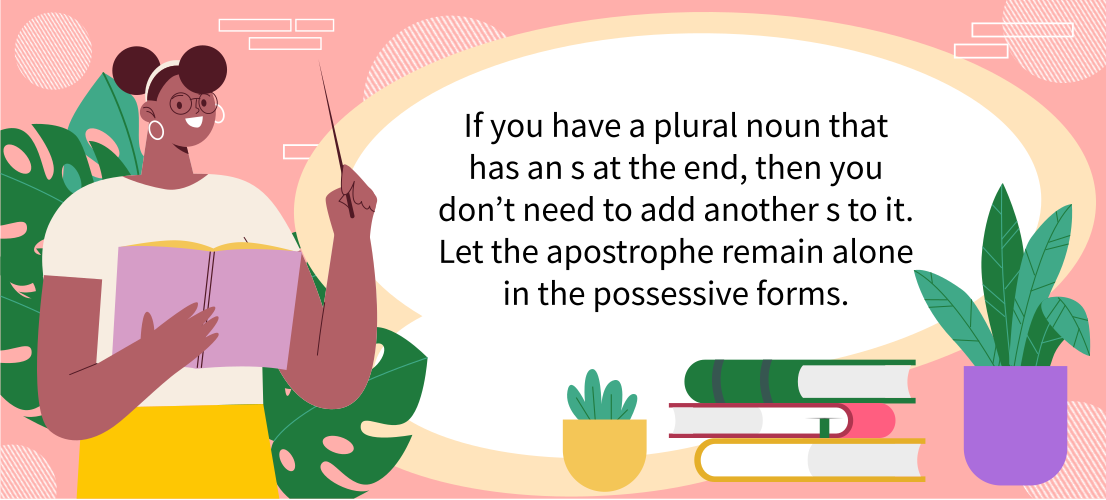
If you have a plural noun that has an s at the end, then you don’t need to add another s to it. Let the apostrophe remain alone in the possessive forms.
Let’s demonstrate that with an example below:
- The Smiths’ house underwent a major remodeling last month.
- The kids’ toys lay scattered on the floor all day.
In the sentences above, you can see how the plural nouns only feature an apostrophe at the end but no extra ‘s’ for becoming a possessive noun. Hence, this makes it clear that plural nouns already containing an‘s’ at the end do not need an extra‘s’ after the apostrophe in their possessive forms.
| Plural Possessive Nouns Examples | |||
|---|---|---|---|
| Babies' crib | Clocks' hands | Womens' dresses | Unicorns' power |
| Inventions' popularity | Planets' trees | Lemons' acidity | Parents' permission |
| Members' votes | Teachers' resumes | Children's toys | People's attitude |
| Cabbages' taste | Octopi's legs | Die's roll | Owls' eyes |
Sample Sentences of Possessive Nouns
Singular Possessive Nouns:
- I love that boy’s skateboard mommy. Can you buy me one like that too, please?
- The woman’s handbag contained all her essentials, including her wallet, mobile phone, and jewelry.
- My brother’s room is always messy and untidy. He is a much-disorganized person.
Plural Possessive Nouns
- The companies’ workers staged a collective protest against low wages.
- The horses’ stalls have been getting dirtier by the day. When do you intend to clean it?
- The two countries’ pop singers recently collaborated on an album.
| Mixed Sample Sentences of Possessive Nouns | ||
|---|---|---|
| Bob’s hat was pink. | Anna's notebook is on the table | My doctor’s office was closed today. |
| I went with my husband's father to the zoo. | He shook the owner’s hand. | The vase’s base is broken. |
| My class’ projects are fantastic. | Put this pen in Vlad’s office. | Eduard's car is in the garage. |
| Children's clothes are expensive | People's mindsets need to be fixed | Anayet's friend is a doctor. |
| I found this baseball rocket in our college's backyard. | My friend's house is very beautiful. | She always corrects people's grammar. |
| The children's camping ideas. | The soldier's uniform. | The eagles' nest. |
| The ladies' seat. | The three years' time. | The people's choice. |
Practice makes progress. Quiz time!
Fill in the correct possessive nouns.
Question 1Review: Possessive Noun- What it is
What key idea does the article explain about “Possessive Noun- What it is”?
Possessive nouns are those words that represent a noun’s belonging. The word possessive also means expressing ownership or belonging. We know it can be tricky to understand this grammar concept without practice resources. This is why we have published more than 100 workbooks and thousands of printable worksheets to help children grasp grammar concepts easily.However, it’s time to return our attention to the topic at hand. So, how do we turn a noun into a possessive noun? For example, if we use the noun teacher in a sentence, we could use a possessive noun as follows:The teacher’s briefcase is
Question 2Review: The Role of Apostrophe in Single Nouns
What key idea does the article explain about “The Role of Apostrophe in Single Nouns”?
There is one punctuation mark that plays the most concrete role in helping us convert a noun into a possessive noun: Apostrophe. Yes, the apostrophe is a little mark, like a comma in the air, which comes in between or after letters in some words.Some of the grammatical situations in which you will have to use an apostrophe include possessive nouns and contractions.
Question 3Review: Possessive Nouns - Singular
What key idea does the article explain about “Possessive Nouns - Singular”?
We told you how we can convert single nouns into possessive nouns simply by adding an apostrophe and an‘s’ at the end of it. For example, let’s take brother as a single noun and convert it into a possessive one in the sentence below.My brother’s surfboard has a hole in it. Let me fix it before he takes it out on the water. When you’re learning about single possessive nouns, it is likely that the ones ending with an s will confuse you.Let’s take the example of a horse. When we have to convert this noun into a possessive one, we will refer to it as follows:The horse’s tail is long, sleek, and be
Question 4Review: Possessive Nouns - Plural
What key idea does the article explain about “Possessive Nouns - Plural”?
Our explanation above must have proved how converting simple nouns into possessive nouns is quite straightforward. But when it comes to converting plural nouns into possessive, the process is a little different.First, it is important to note that most nouns, but not all, require an‘s’ or ‘es’ at the end for becoming plural. For example, glass becomes glasses as plural or book becomes books as plural.But here comes the slightly different rule for plural possessive nouns ending with s.If you have a plural noun that has an s at the end, then you don’t need to add another s to it. Let the apostrop
Question 5Review: Sample Sentences of Possessive Nouns
What key idea does the article explain about “Sample Sentences of Possessive Nouns”?
Singular Possessive Nouns:I love that boy’s skateboard mommy. Can you buy me one like that too, please?The woman’s handbag contained all her essentials, including her wallet, mobile phone, and jewelry.My brother’s room is always messy and untidy. He is a much-disorganized person.Plural Possessive Nouns The companies’ workers staged a collective protest against low wages.The horses’ stalls have been getting dirtier by the day. When do you intend to clean it?The two countries’ pop singers recently collaborated on an album. Mixed Sample Sentences of Possessive Nouns Bob’s hat was pink. Anna's not

Final Thoughts
Possessive nouns are nouns that indicate the possession or ownership of a thing, idea etc. We can convert singular or plural nouns into possessive forms with an apostrophe and in most cases an‘s’ at the end.