Many of us have a favorite hobby that we pick up since we were very little. Like reading! When we learned how to read we first memorized the alphabet, then we learned the meaning of words, how to read sentences and paragraphs, and finally we were able to read entire books with amazing stories.
Of course, when we read a book now, we don’t think about the alphabet anymore! We just use it as a strong basis that allows us to learn more advanced skills.
The same happens in Arithmetic: we need to memorize some facts that will help us go further to solve more challenging mathematical problems.
The ultimatelearningplatform that every parent needs in a K-8th grade household - to boost scores and confidence!
Monthly
Monthly
Everything is included. Anywhere!
Math & ELA Subjects
$12.99
/month
Total:
$40.00
$12.99
Perfect for flexible learning - access expert-led lessons, practice questions, and printable workbooks instantly, with no long-term commitment.
3 Days Money Back Guaranteed
All Updates and Additions
One of those facts is the multiplication chart. In the following, we will learn what it is, how to use it, and also some tricks on how to memorize it!
What is the multiplication chart?
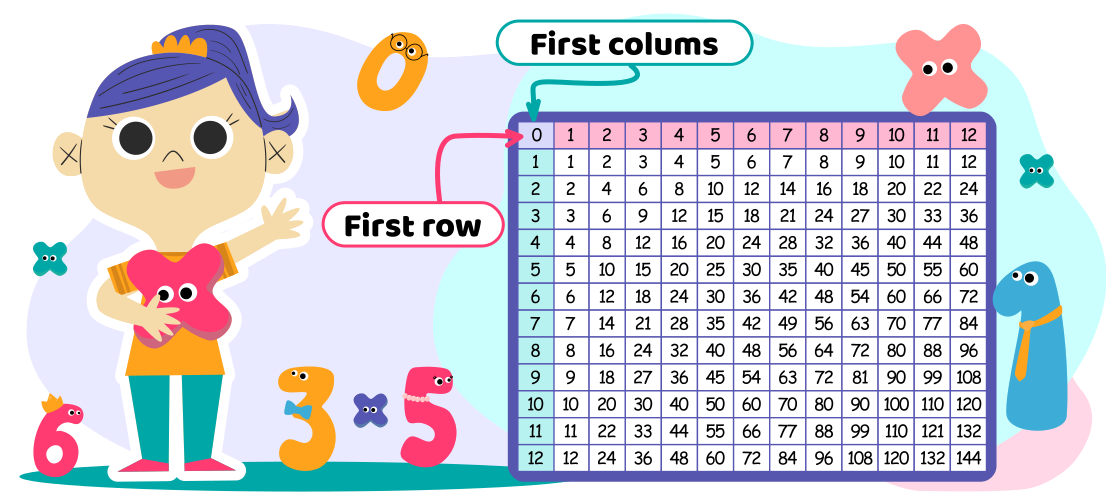
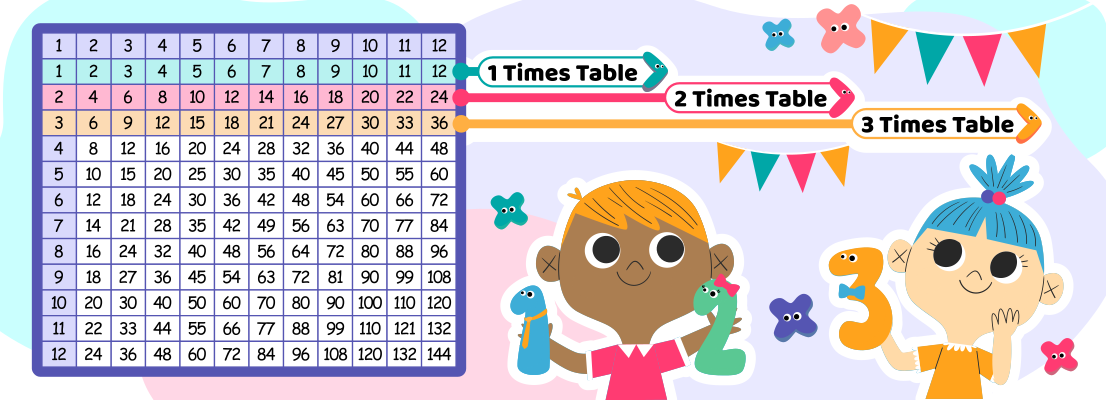
It is a chart that contains all possible multiplications of a number from 1 to 12 times a number from 1 to 12. It looks like the image below, where in the first column and first row are written the numbers that we want to multiply.
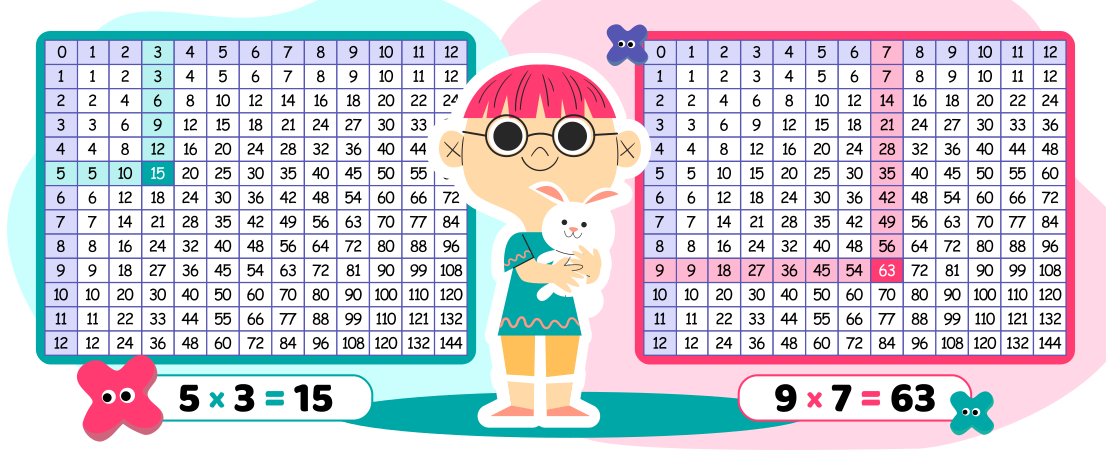
For example, if we want to know the value of 5×3, we find the row where 5 is placed, the column where 3 is placed, and we look at the value where the two lines meet. As in the chart from the left, we see that 5×3=15. Similarly, we see in the chart from the right that 9×7=63.
We now realize that the multiplication chart is very handy to quickly find the value of a product.
Example: Diane went to the flower shop to buy different kinds of flowers to make a big bouquet. She bought a dozen sunflowers, a dozen roses, a dozen lilies and a dozen daisies. How many flowers did Diane buy in all?
Diane bought 4 different kinds of flowers: sunflowers, roses, lilies and daisies. She bought 12 units (a dozen) of each.
Thus, Diane bought 4×12 flowers in all.
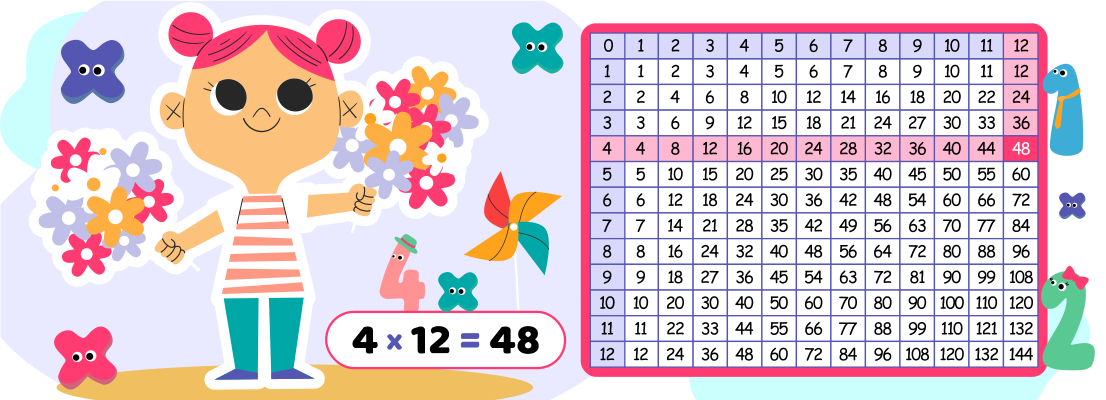
In our chart, the row where 4 is, and the column where 12 is, meet in 48. Meaning that 4×12=48.
Thus, Diane bought 48 flowers in all.
This amount would be very easy to calculate at the flower shop if Diane would have a multiplication chart with her, but she can’t carry a chart everywhere, right? What she does carry everywhere is her memory where she stores all the numbers in the chart. Yes! As Diane we are able to learn by heart the whole chart, but let’s simplify it a bit first.
The first step towards simplifying the chart is dividing it into multiplication tables.
What are the multiplication tables?
A multiplication table is a list that contains the information from a single row in the chart. That is, a list with the multiples of a number.
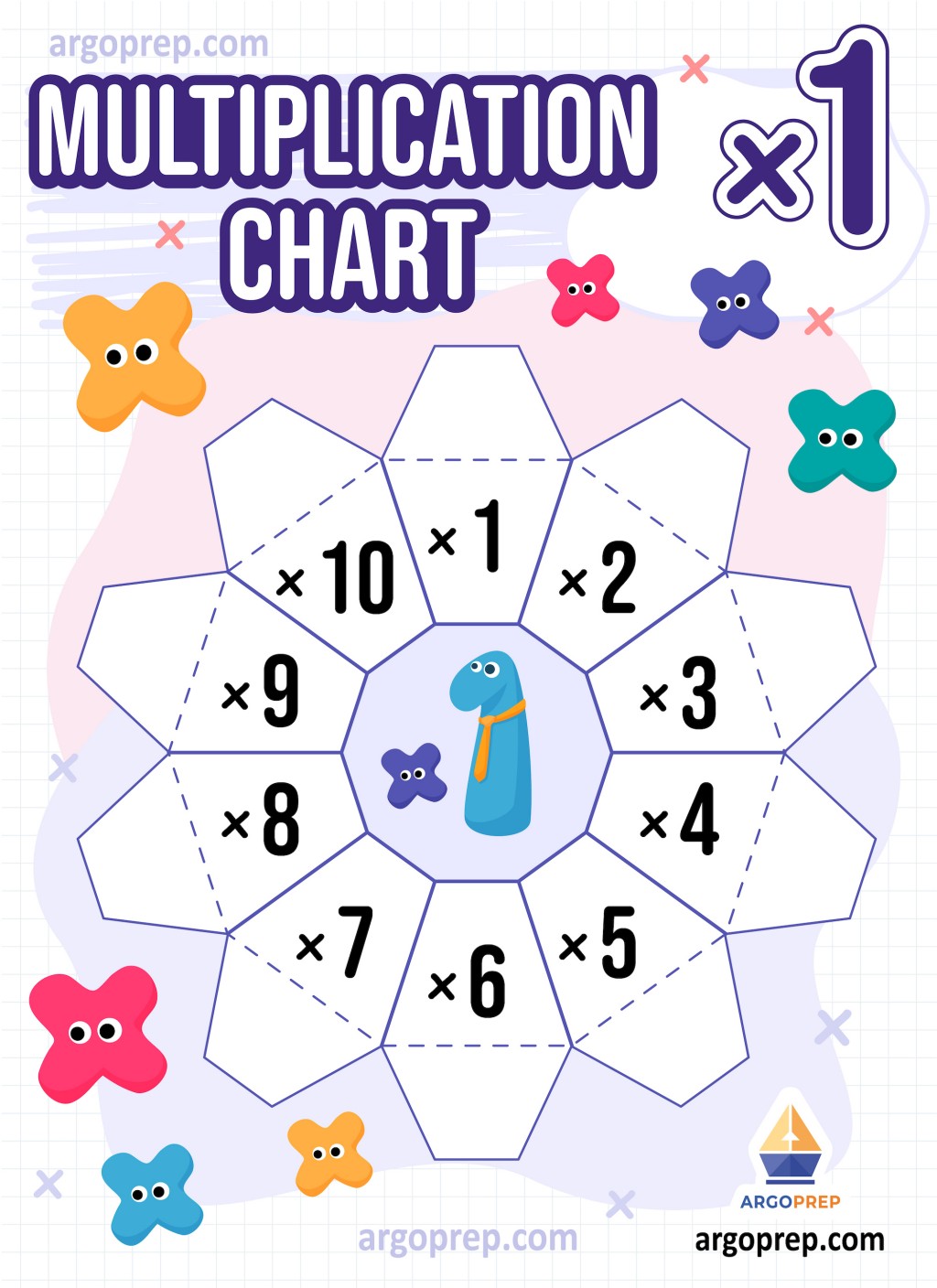
For example, the first row in the chart corresponds to the 1 Times Table; that is, the values we obtain when we multiply by 1:1×1,1×2,1×3,1×4, etc. The second row in the chart corresponds to the 2 Times Table with the values: 2×1,2×2,2×3,2×4,2×5, etc. The third corresponds to the 3 Times Table and so on.
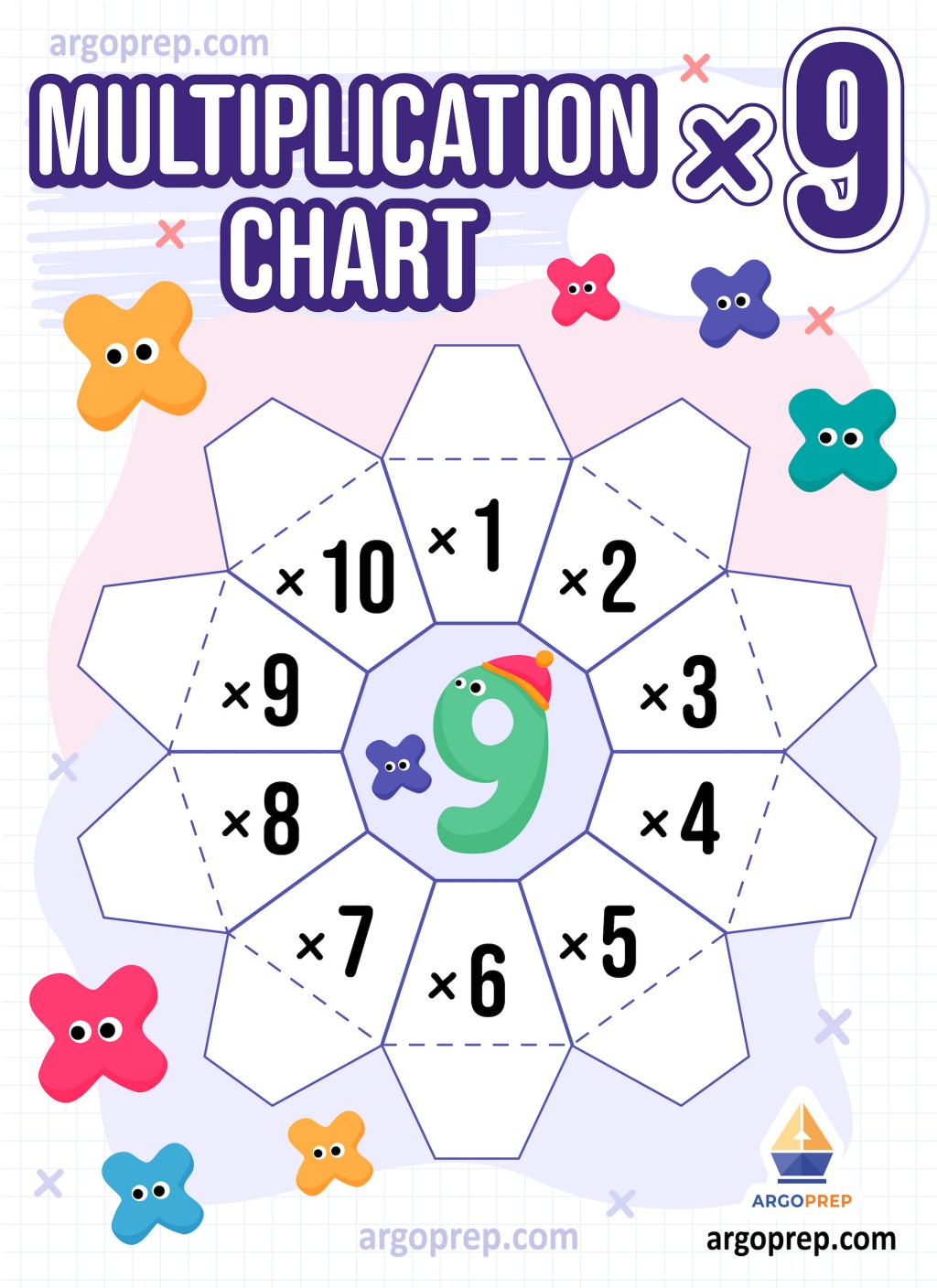
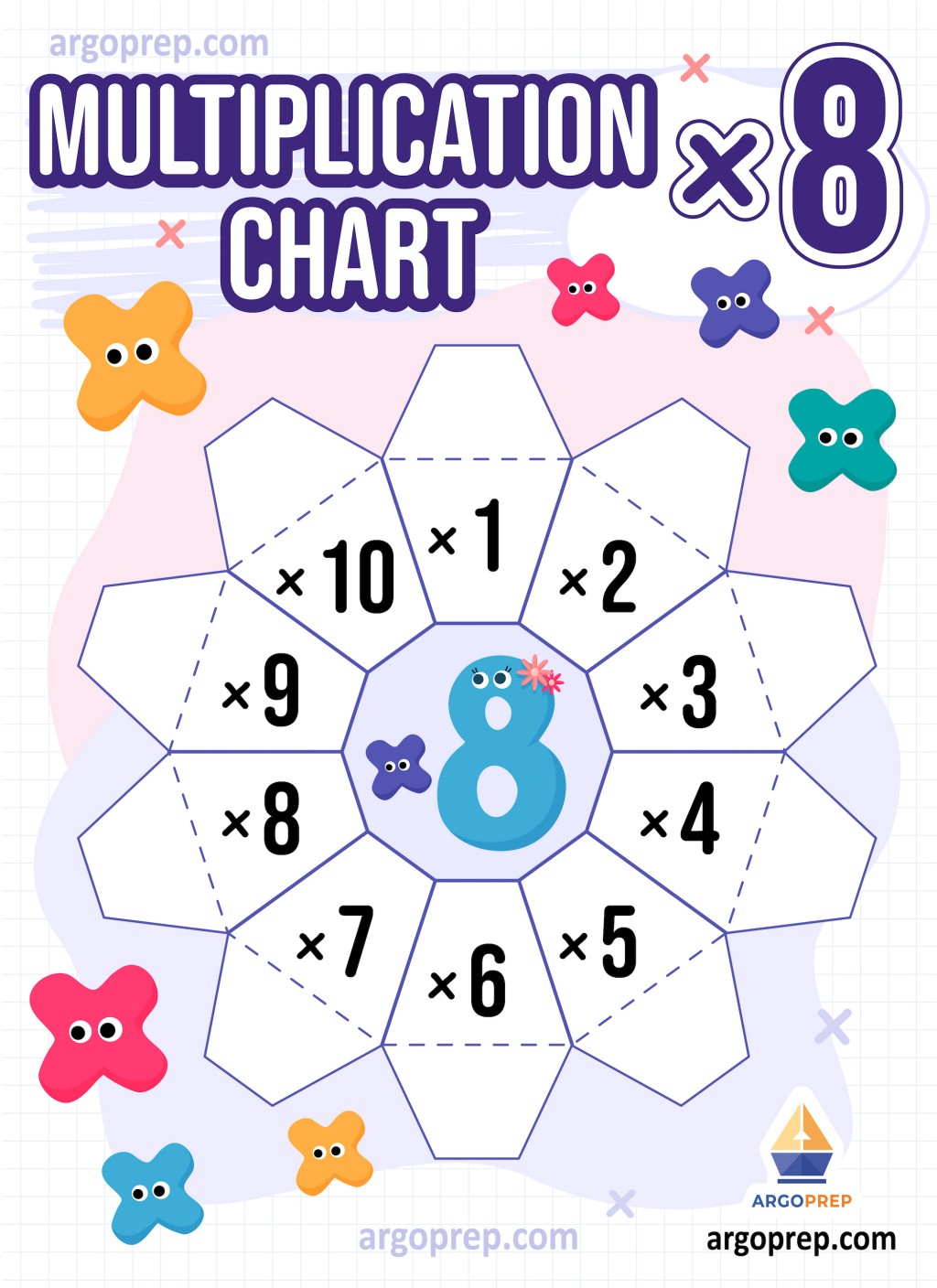
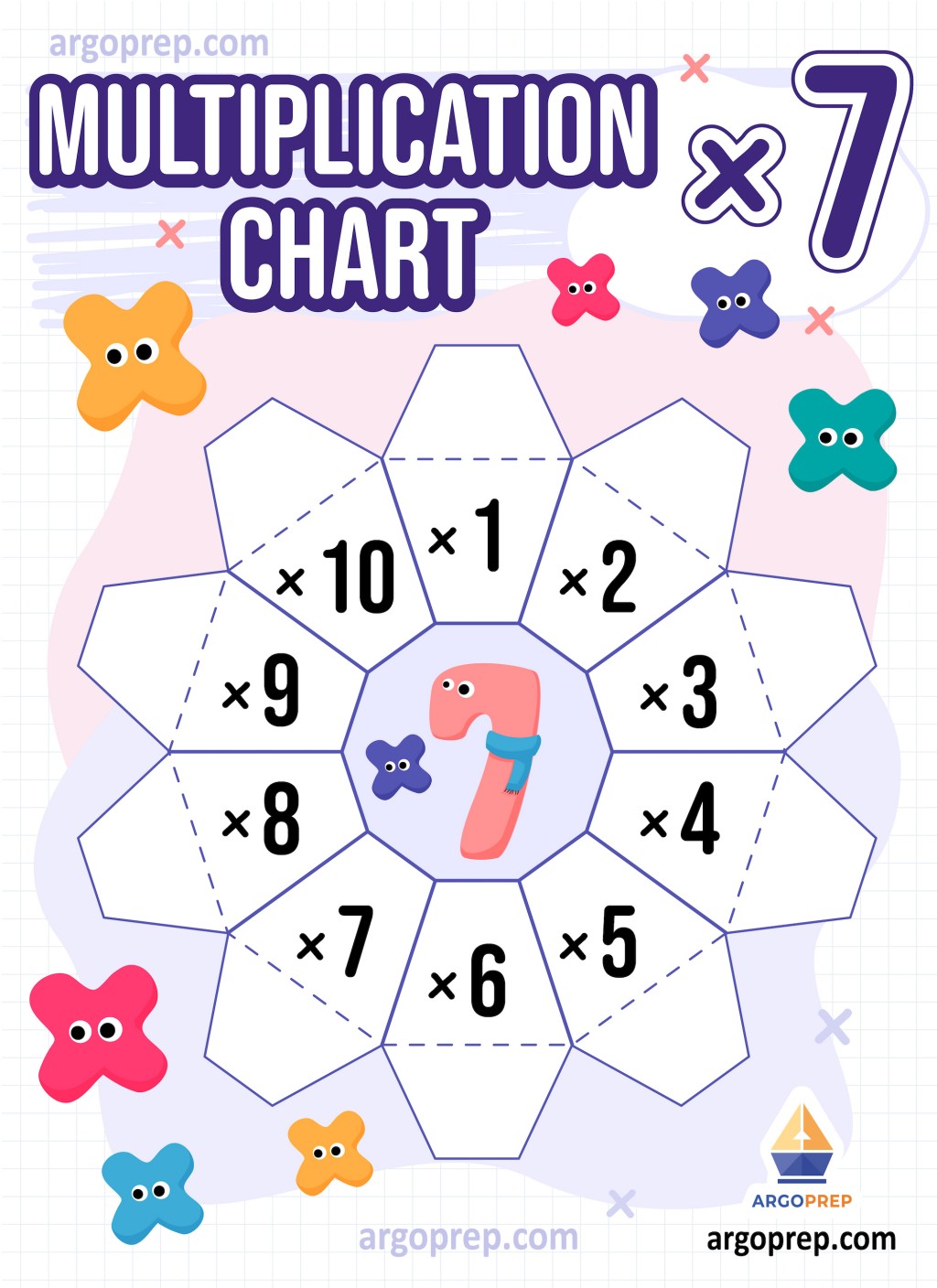
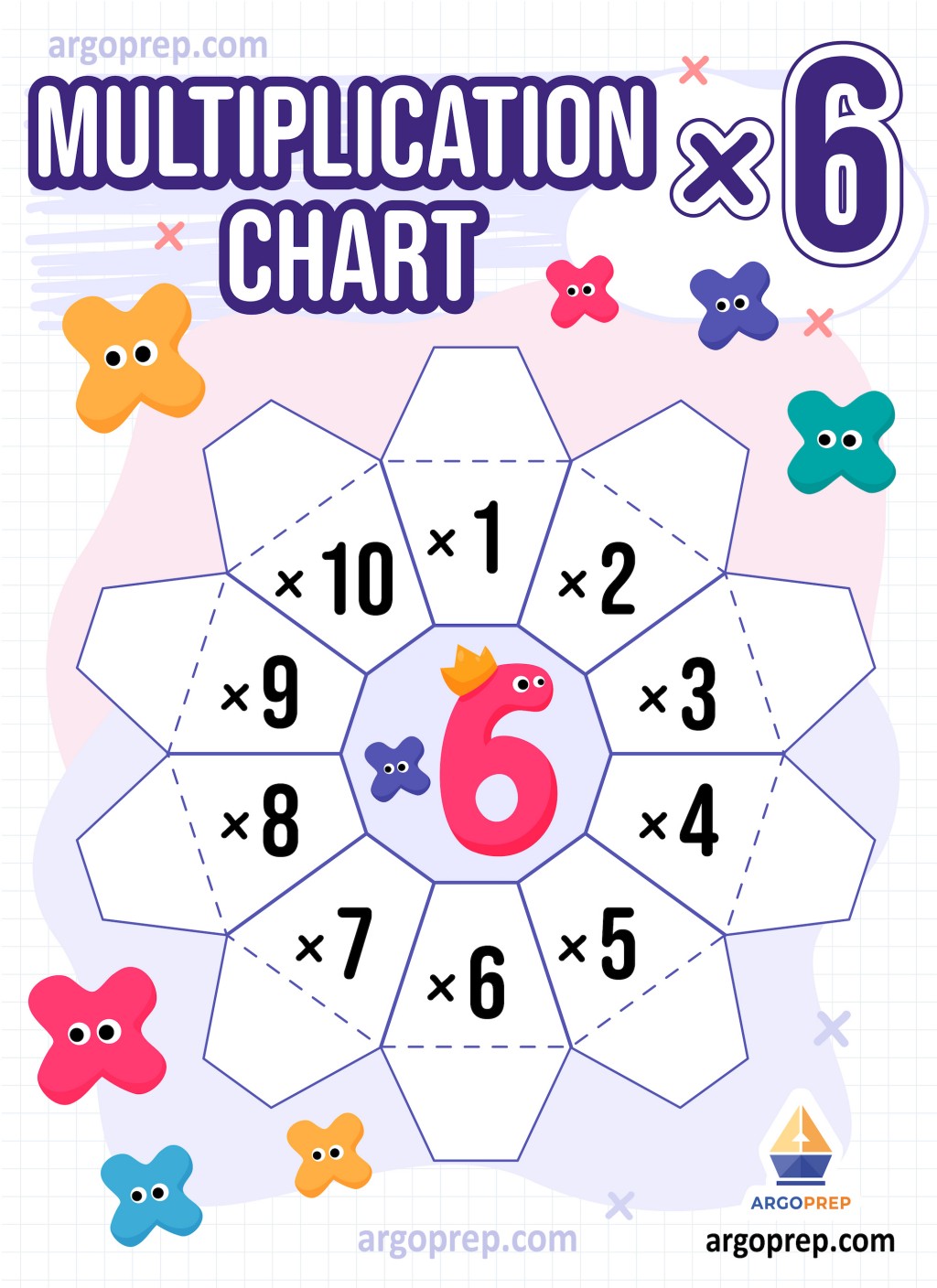
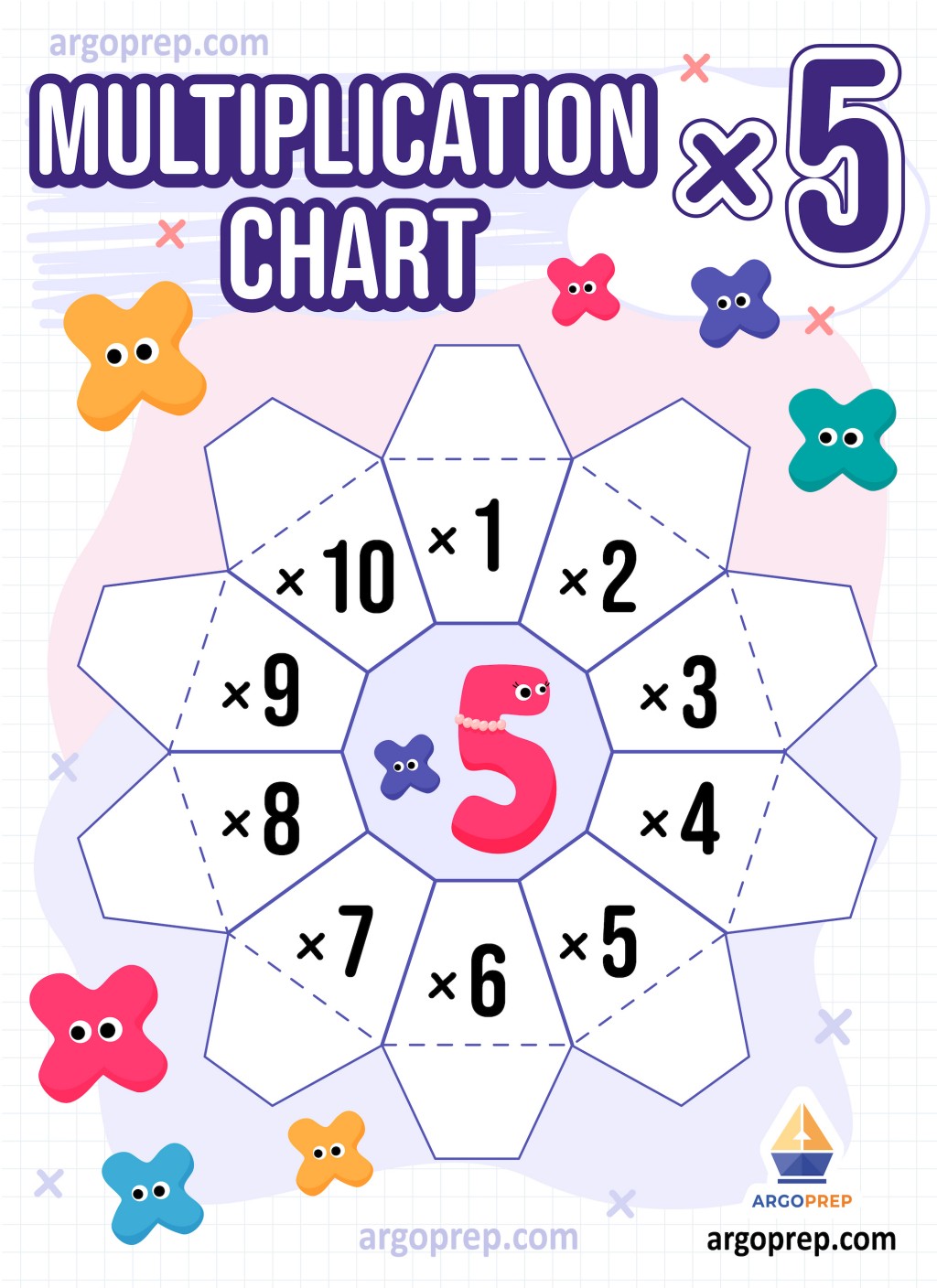
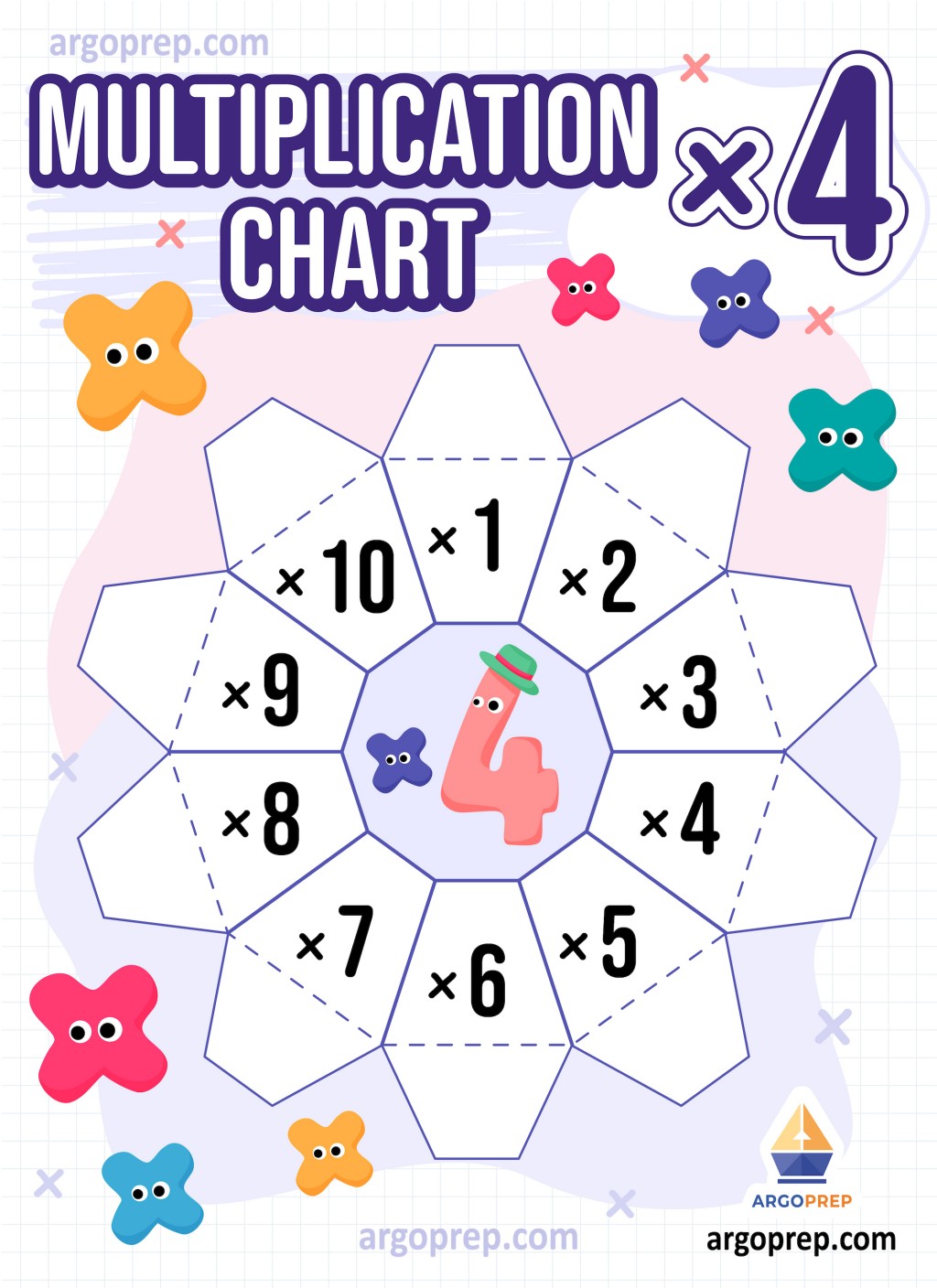
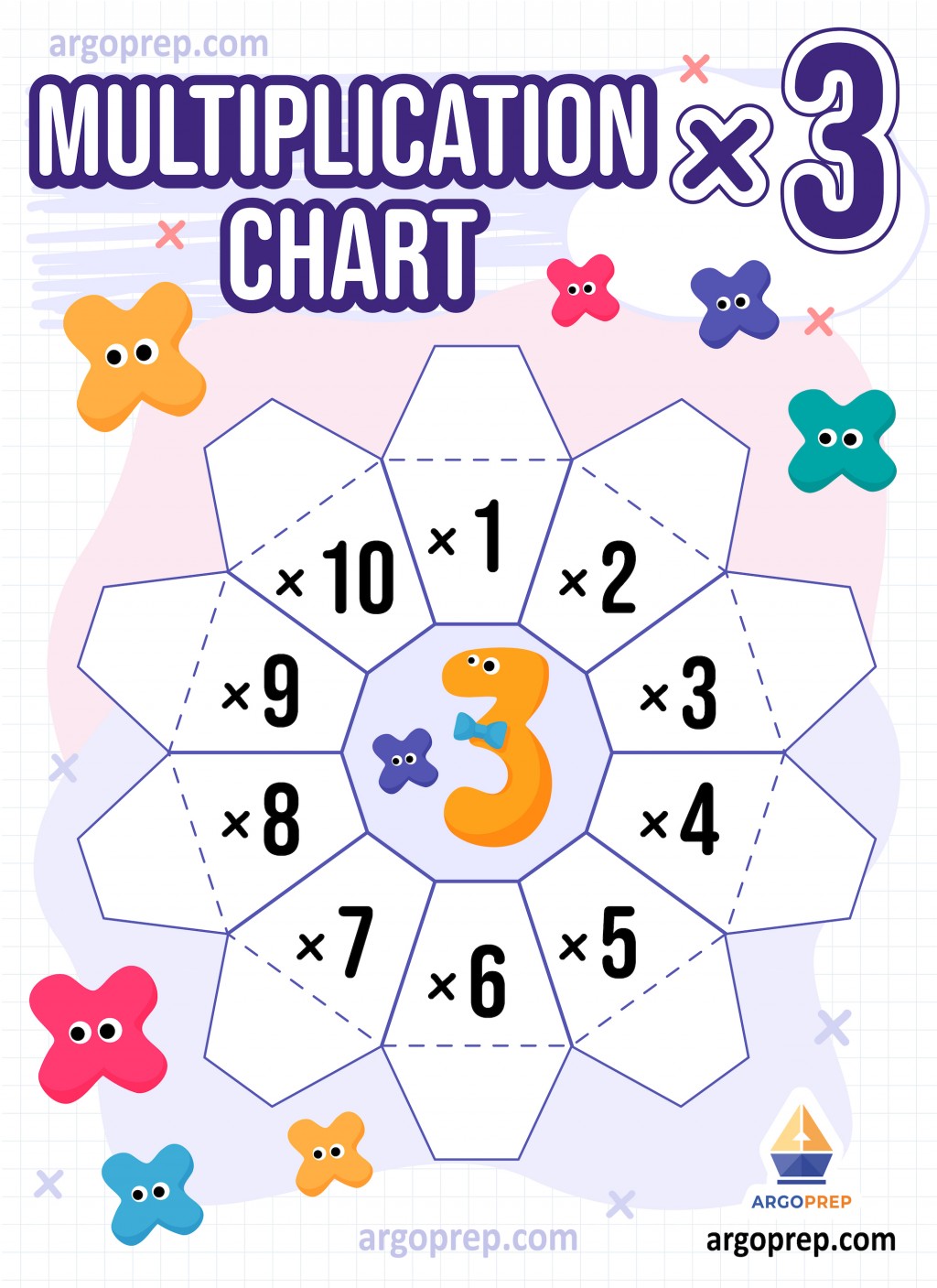
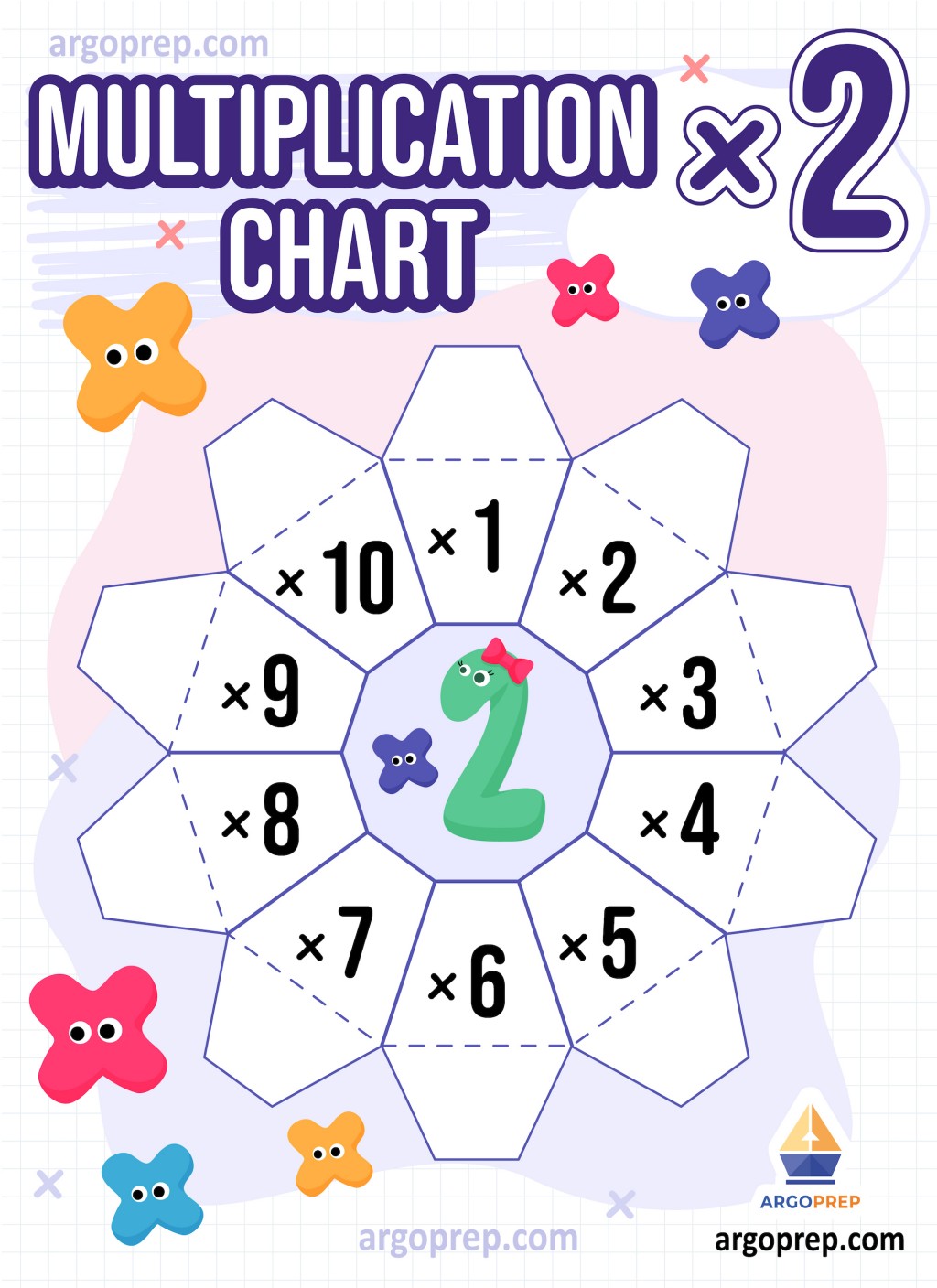
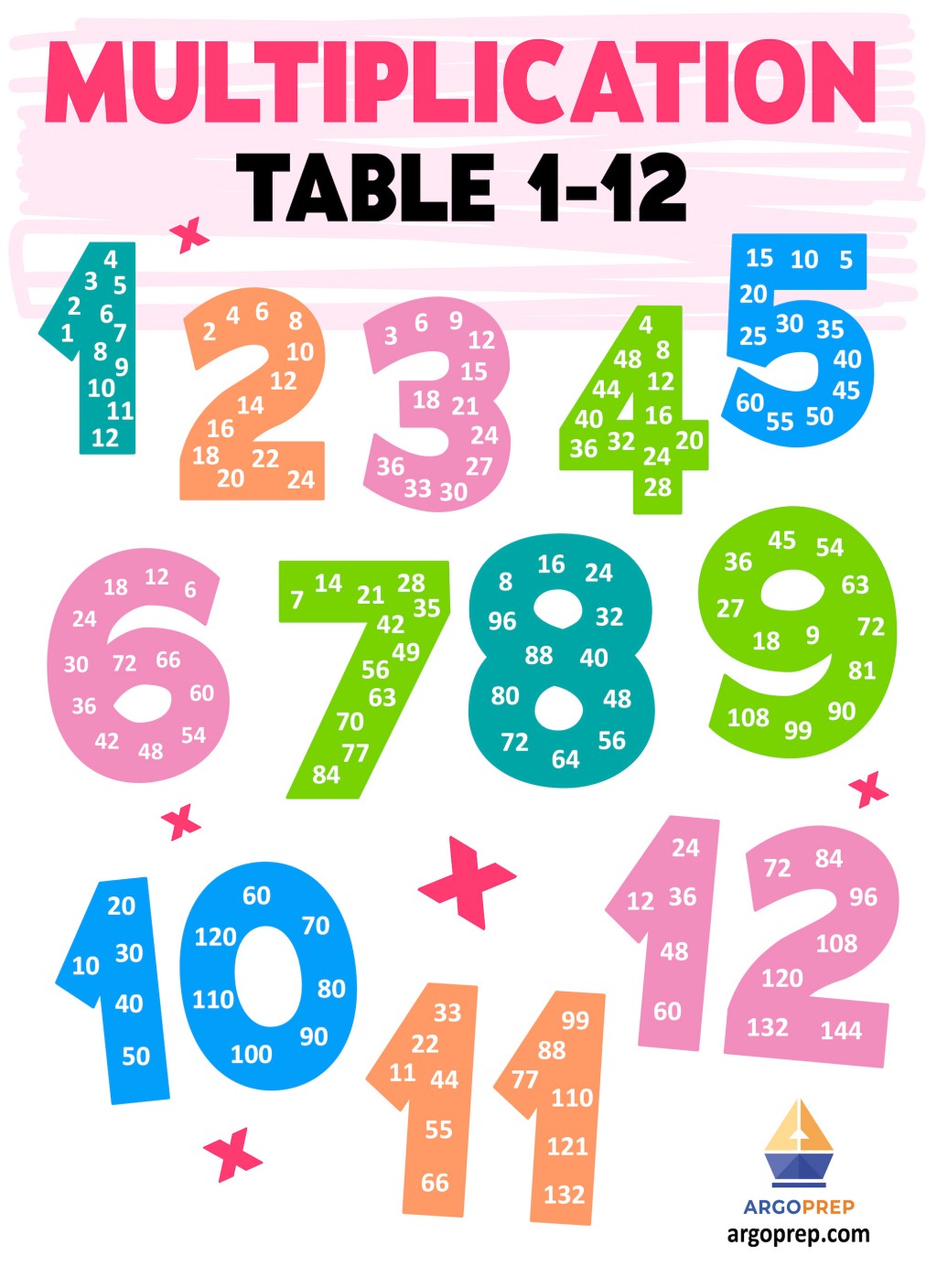
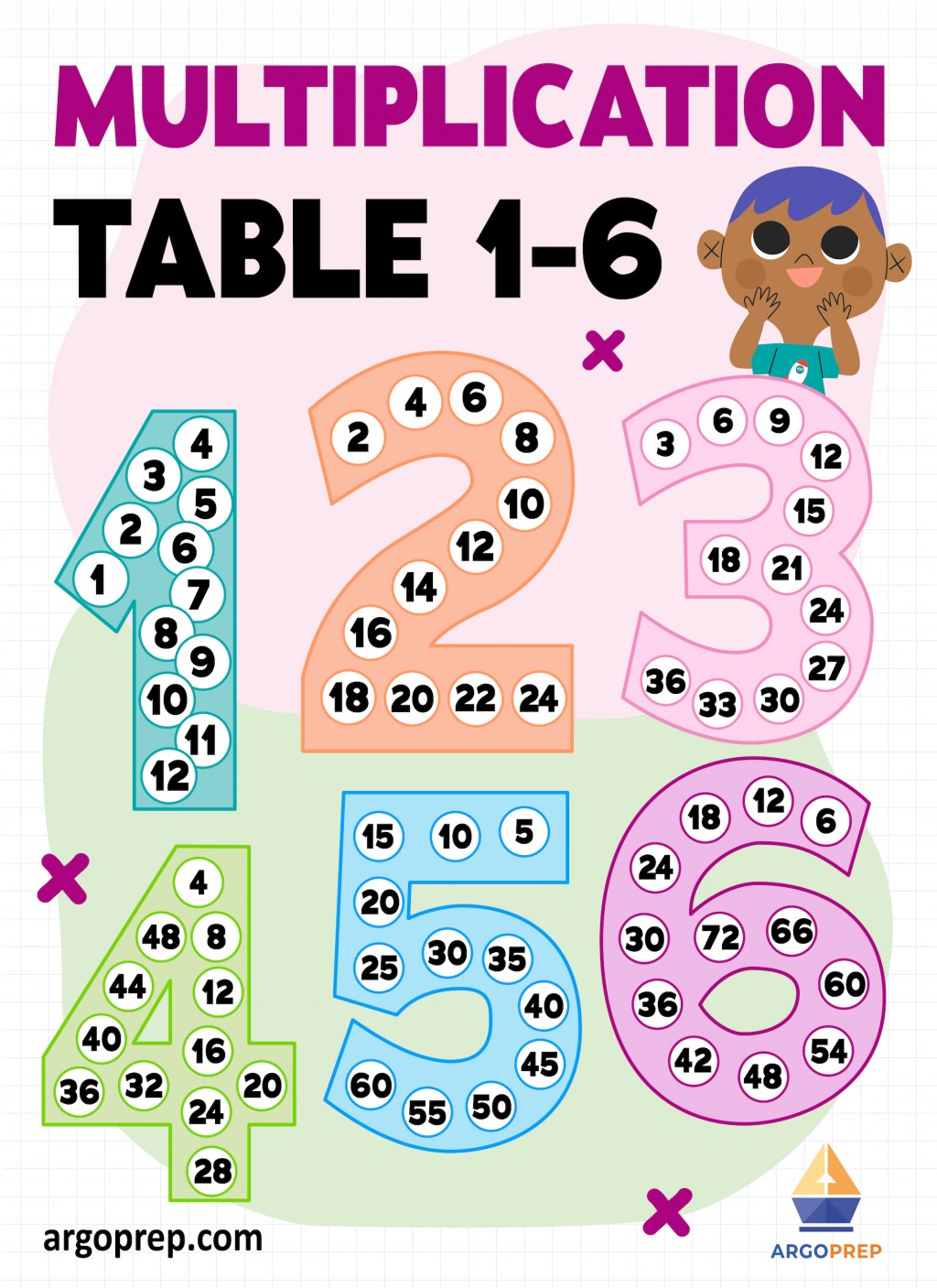
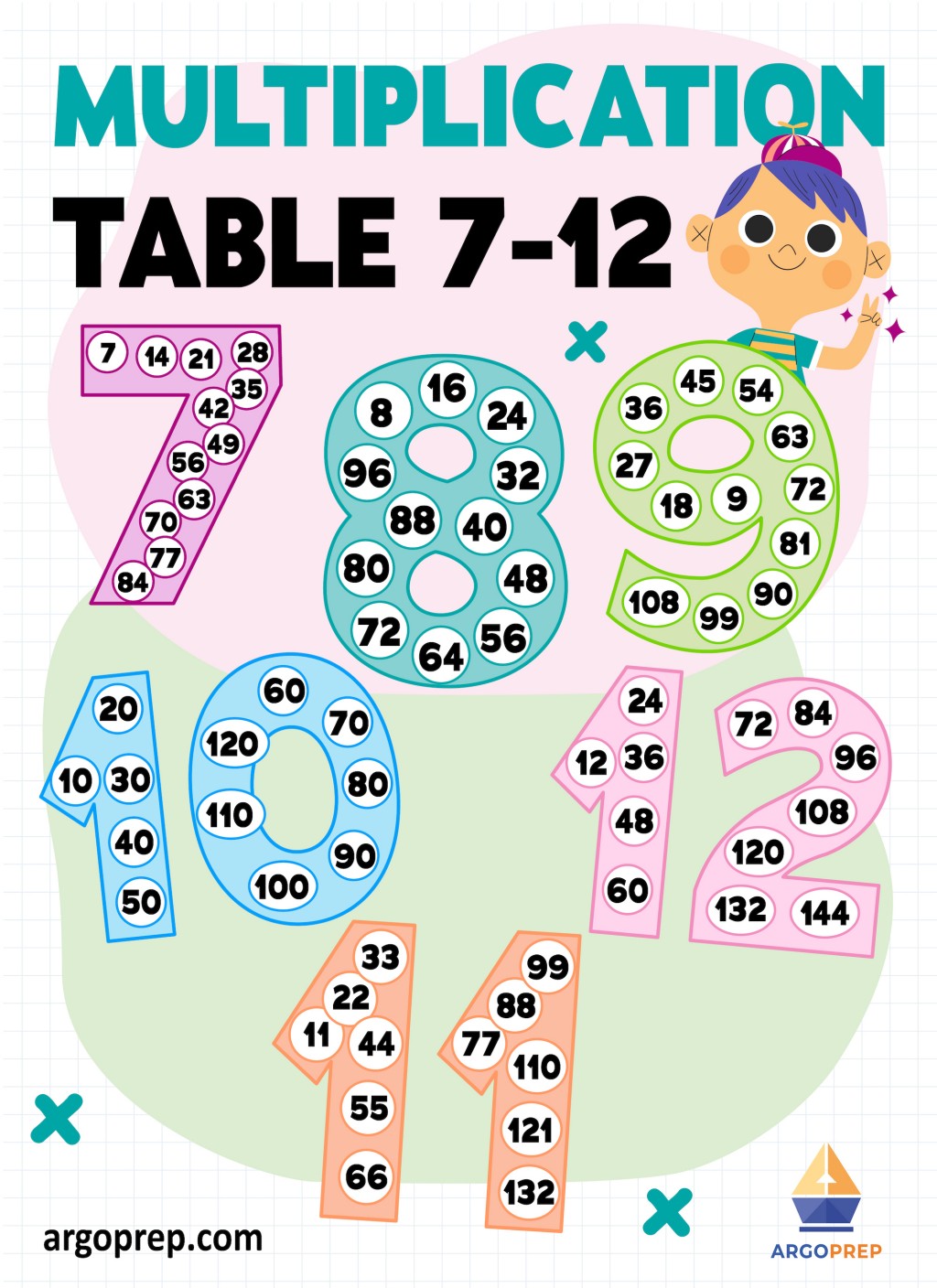
We have as many multiplication tables as rows there are in the chart: 12 multiplication tables. They are all shown below.
Memorizing multiplication tables is a workout for our brain? Each time we learn something new, connections are formed between the neurons in our brain, and the harder we try to recall this new information, the stronger the connections become.
The ultimatelearningplatform that every parent needs in a K-8th grade household - to boost scores and confidence!
Monthly
Monthly
Everything is included. Anywhere!
Math & ELA Subjects
$12.99
/month
Total:
$40.00
$12.99
Perfect for flexible learning - access expert-led lessons, practice questions, and printable workbooks instantly, with no long-term commitment.
3 Days Money Back Guaranteed
All Updates and Additions
A closer look at the multiplication chart
As we already discussed, learning the multiplication chart is the same as learning the 12 multiplication tables. Let’s focus now on knowing some characteristics of the chart and tables that will help us memorize them.
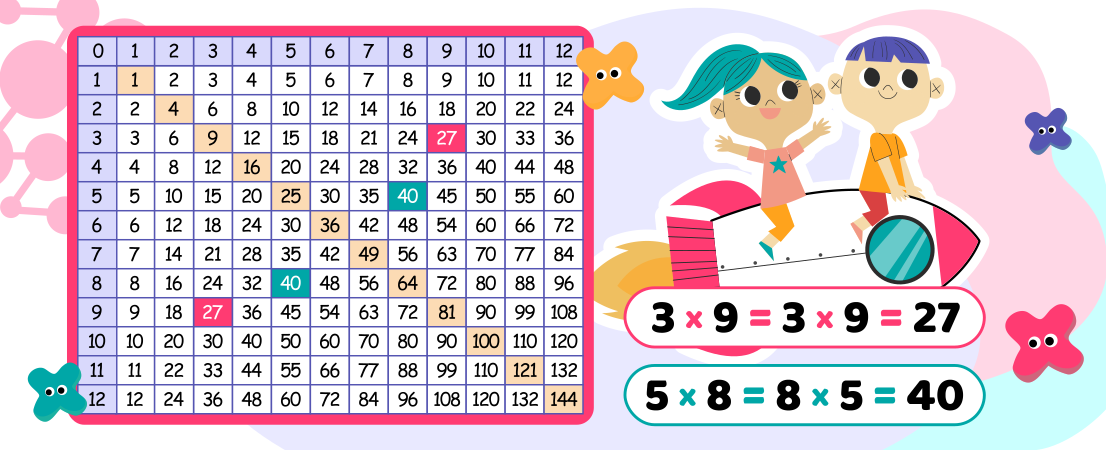
We just need to memorize half the chart: if you consider the diagonal highlighted in green below, you will notice that the numbers in the triangle above it correspond to the numbers in the triangle below it as if we had a mirror across the diagonal.
In other words, the chartissymmetrical respect to the diagonal because multiplication is commutative: for example, 5×8=8×5 and 3×9=9×3. The order in which we multiply doesn’t change the result!
1. All numbers in the diagonal are squares: you can easily remember the numbers in the diagonal, because each one is the product of a number with itself: 1×1=1,2×2=4,3×3=9,4×4=16, and so on.
2. Memorize the easier tables first: the 1 Times Table is the easier one to memorize because 1 times any number gives the number itself: 1×8=8,1×6=6, etc.
To memorize the 2 Times Table just double each number: for example, 2×7=7+7=14 and 2×9=9+9=18.
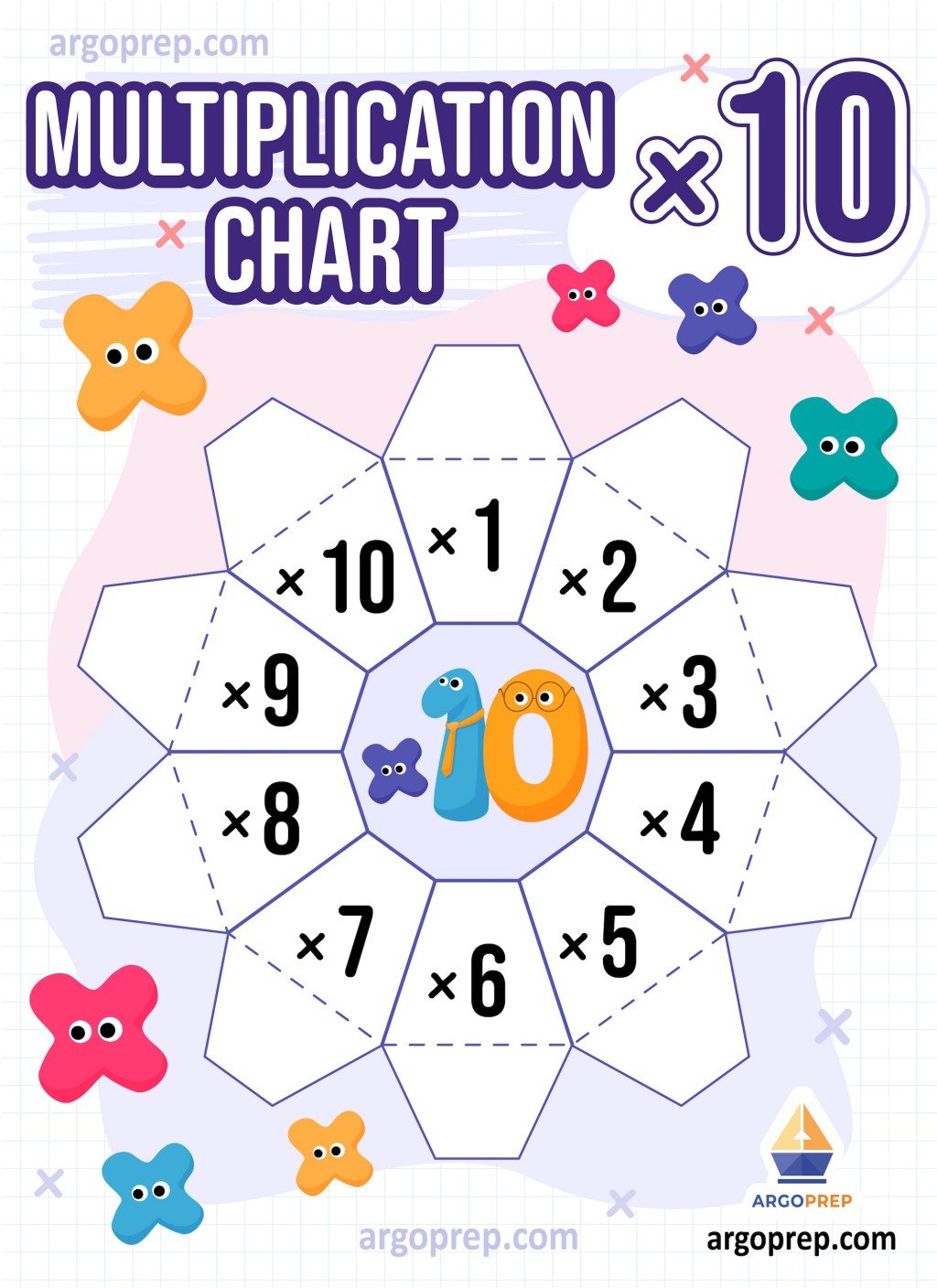
To memorize the 10 Times Table just put a zero at the end of the number that you are multiplying: for example, 10×5=50 and 10×12=120.
Apply these tricks to learn all of the products below.
3. Find a pattern in each table: here are some patterns that will help you remember the following tables. In the5 Times Table, each product finishes by 5 or 0, alternately.
So, if you already memorized 5×6=30, for example, but you have troubles remembering 5×7, just think on the closer number that follows 30 and ends in 5, which is 35. Then, 5×7=35!
In the 8 Times Table, notice that the products end in 8, 6, 4, 2, 0 and again 8, 6, 4, 2, 0, 8, 6. These are the even digits from bigger to smaller.
So, for example, if you remember 8×3=24, and you want to memorize 8×4, think on the closer number that follows 24 and ends in 2: it is 32!
Thus, 8×4=32. Similarly, to get 8×5 find the closer number that follows 32 and ends in 0: it is 40. Then, 8×5=40.
In the 9 Times Table, notice that the products end in 9, 8, 7, 6, 5, 4, 3, 2, 1, 0, 9 and 8, in that order; which are all the digits in decreasing order.
Also, each product from 9×1 to 9×10 is a two-digit number such that the sum of its digits is 9. For example, 9×2=18 and 1+8=9, and 9×5=45 and 4 + 5 = 9. So, if you know that 9×7=63, then 9×8 is the closer number that follows 63, ends in 2 and whose digits’ sum is 9: 72=9×8.
In the 11 Times Table, all multiplications by a number between 1 and 9 is a number with two equal digits.
For example, 11×3=33, 11×6=66, and 11×9=99. You just need to memorize 11×12 and 11×13. For these two,try our last trick.
5. Write the product as the sum of two products that you already know: for example, 11×12 (eleven times 12) is the same as ten times 12 plus 12.
That is, 11×12=(10×12)+12=120+12=132. For this, you need to do a little calculation in your head, but you will get used to it with a lot of practice!
How to memorize the multiplication chart?
Use the previous tricks to memorize the chart, but do it by parts. Don´t try to learn the whole chart in a single day or in a single week! Go step by step, and when you know by heart a part of it, continue with the rest.
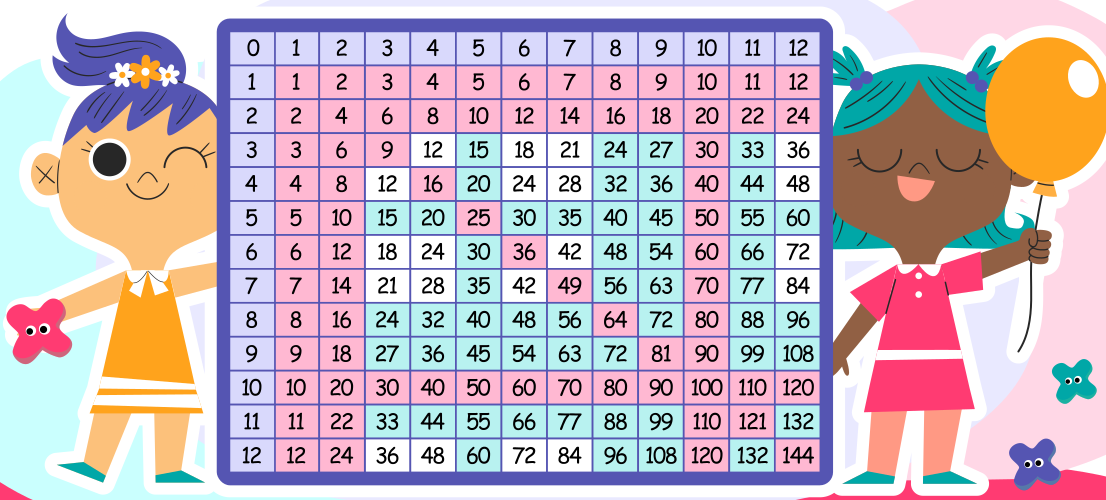
For example, start applying tricks 1 to 3 to memorize the green part of the chart below.
The ultimatelearningplatform that every parent needs in a K-8th grade household - to boost scores and confidence!
Monthly
Monthly
Everything is included. Anywhere!
Math & ELA Subjects
$12.99
/month
Total:
$40.00
$12.99
Perfect for flexible learning - access expert-led lessons, practice questions, and printable workbooks instantly, with no long-term commitment.
3 Days Money Back Guaranteed
All Updates and Additions
In a second phase, you can apply trick 4, so that you can also memorize the blue part of the chart. At this point, you will know most of the chart!
Finally, use trick 5 to memorize the white part of the chart, and remember that you just need to know half of them.
Each of these steps can be achieved by repeating the tables in your mind, writing them several times, or putting the chart and tables in a place where you can see them every day.
Each person learns and memorizes facts in different ways. That is why you should find your own way, always keeping in mind that there is no rush and that after recalling the whole chart you will be able to apply all those multiplications to real life!
Example: Kevin is reading a book. He reads 9 pages every night. How many pages has Kevin read in a week?
A week has 7 nights, and Kevin reads 9 pages each night. Then, in a week Kevin has read 7×9 pages. Recall either the 7 Times Table or the 9 Times Table to get 7×9=63: the number of pages Kevin has read in a week.