
If you are unsure if your child is an auditory learner or not, think about their performance in school. Teachers will praise auditory learners for their love of group projects and social personalities.
Maybe you have noticed that your child struggles with assessments, writing assignments, or individual assignments.
When working with an auditory learner, it is impossible not to enjoy their infectious love of learning.
They are always the first to participate, willing to chat with the teacher, and a valuable contributor to any group project. But auditory learners struggle when they have to put their thoughts and learning on paper.
This learning style series is exploring in-depth how best to support these unique learning styles.
Characteristics of an Auditory Learner
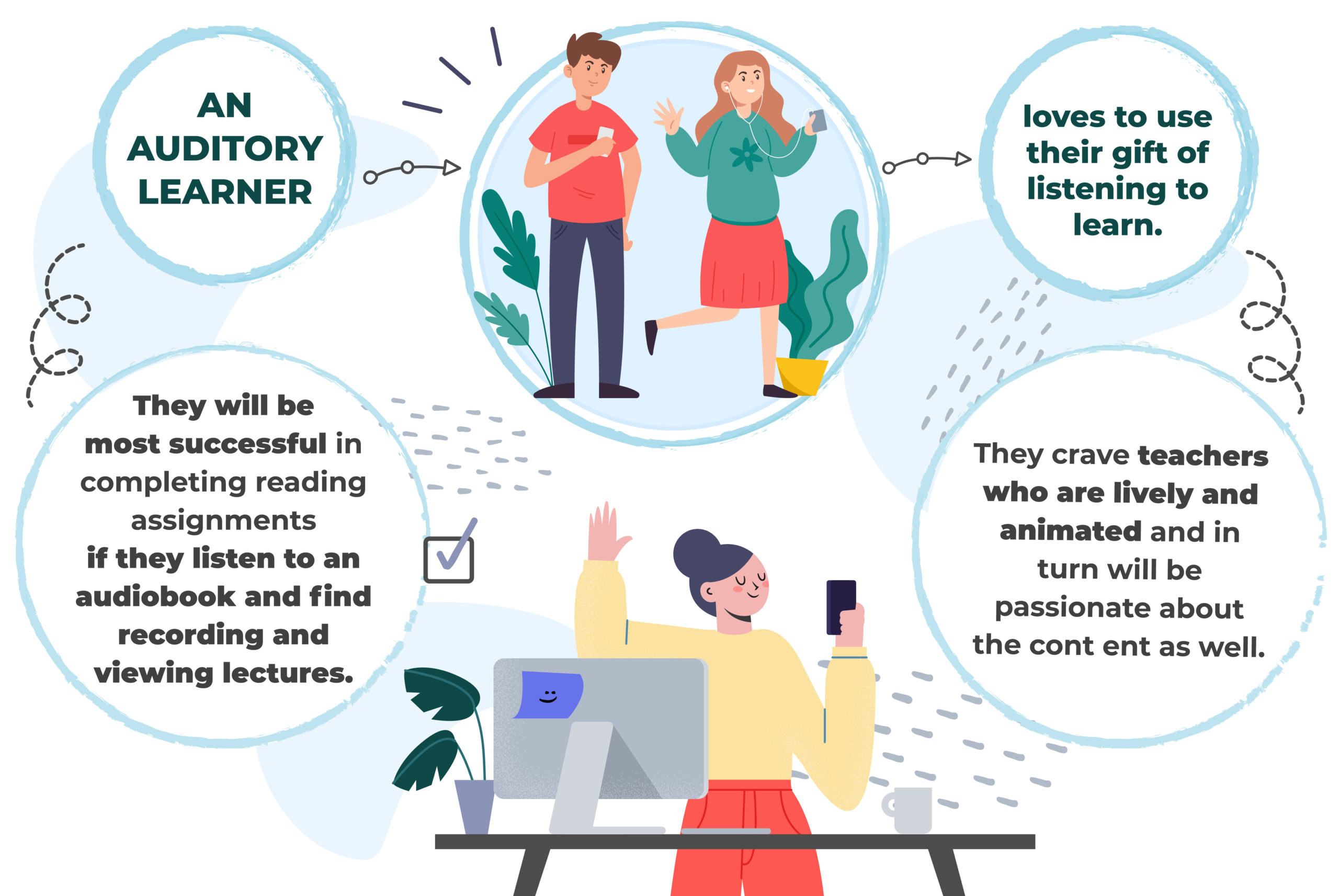
An auditory learner loves to use their gift of listening to learn.
This specific learning style focuses on the need for spoken words to solidify, deliver, and understand coursework.
The auditory learner loves music, podcasts, and audiobooks.
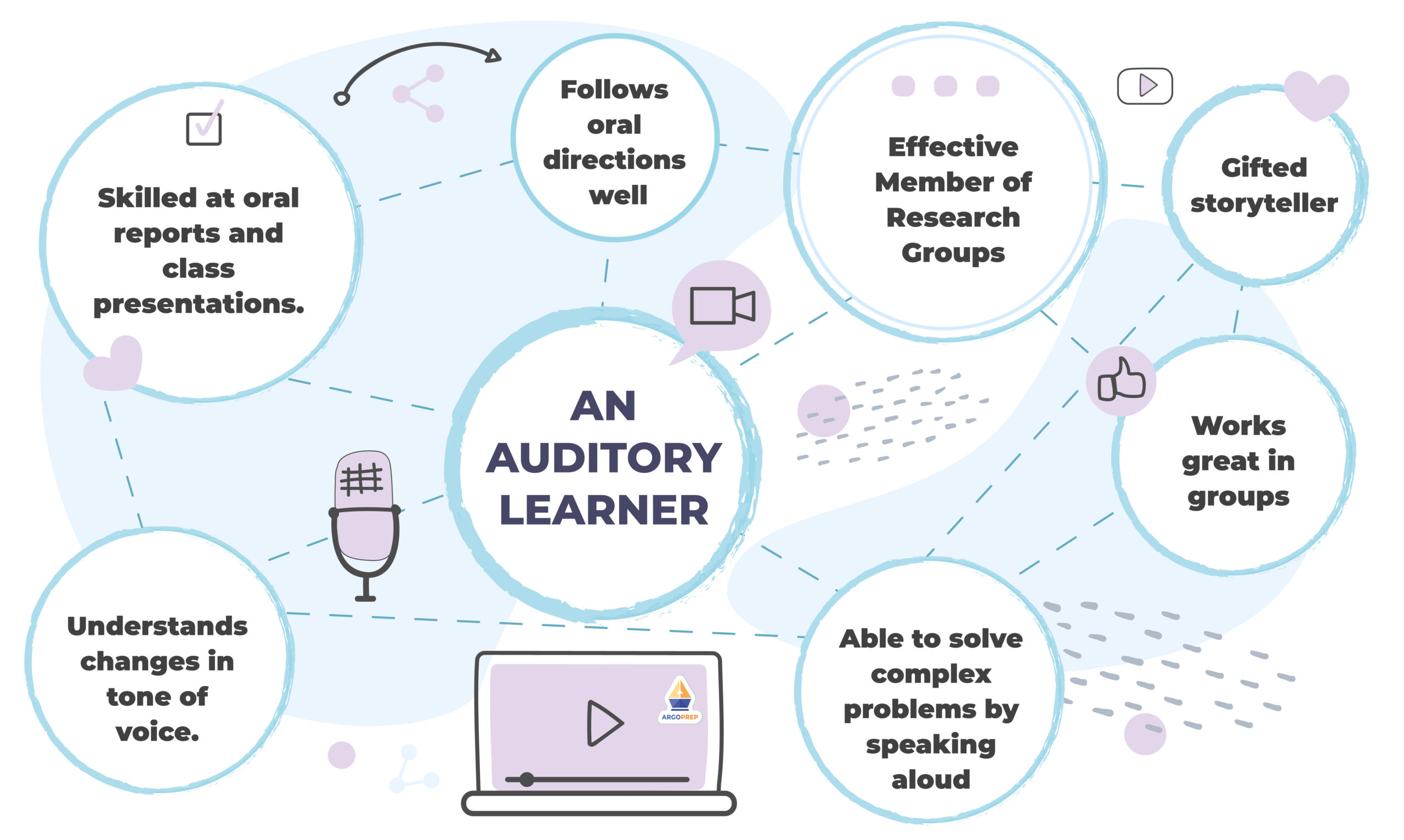
Auditory learners are commonly the most engaged student in the class. They love to interact with teachers and peers and enjoy the chance to explain complex concepts to others. They will often be willing to repeat instructions, be a leader in a group project, and love presentations.
An auditory learner is very social and finds that learning best happens when people are working together and discussing the concepts to reinforce understanding.
They are highly skilled at identifying nuances of tone in speech and love telling stories to anybody who will listen.
Auditory learners will often "whisper" the words they are reading during independent reading time. These students enjoy listening to music whenever they are working on other tasks.
They enjoy listening but may lose concentration quickly. They do not like a lot of outside chatter when learning. Instead, they will focus on the teacher and their music. Excess background noise will be distracting to their learning process.
Common Struggles for the Auditory Learner
Auditory learners are incredibly social. They will find themselves in the center of attention regularly. Storytelling and group work are the ideal situations for them, but often this social streak can hurt them and their grades.
They may need reminding to come back to the group and focus on the teacher.
Auditory learners struggle with written exams but thrive during oral exams. They will enjoy the spoken portion of any foreign language class.
It's particularly tricky for them to learn with teachers who are monotone or who do not vary their instructional methods.
They crave teachers who are lively and animated and, in turn, will be passionate about the content as well.
Auditory learners do not enjoy giving word-for-word definitions of concepts. They need the freedom to rephrase things into their own words for understanding.
They do not enjoy writing and reading assignments and need the chance to "perform" their learnings.
Applying Learning Style at School
Auditory learners will always prefer an oral report over any kind of multiple-choice test. If they are struggling, encourage them to participate in more class discussions and focus on reiterating information in their own words to reinforce understanding.
They will prefer assessment questions that state "explain" or "describe" over a simple multiple-choice option.
Any opportunity that they can put things into their own words, they should take as it will help them understand information more clearly.
This learning style craves the opportunity to roleplay or have open dialogue/debate about concepts.
Auditory learners will seek chances to talk about what they're learning and welcome critiquing for improvement. They want to work with others and aren't afraid to debate.
Auditory learners will thrive in classrooms where they aren't expected to copy down notes each day. You will find a happy student when they are in a class with variety and opportunities to discuss concepts.
[workbook=13474][workbook=13849][workbook=12177]...
Applying Learning Style at Home
The most important thing to remember about an auditory learner is that they are social creatures. So even if they are not talking with you or a friend, they enjoy using their voices, and hearing words to help them solidify information.
That is why at home, it is helpful to encourage them to create and use mnemonic devices and write songs to help them remember important facts or dates.
If you are too tired to write a song to teach your child about the parts of a plant cell, consider checking out resources such as Flocabulary.
Engaging Activities for the Auditory Learner
Auditory learners will come up with many words games (such as rhyming and singing facts to a tune) to help them understand and recall the information. They may find it valuable to talk to themselves in a mirror.
They will be most successful in completing reading assignments if they listen via an audiobook and will find a recording and reviewing lectures to be more helpful than taking notes.
Auditory learners will relish the opportunity to listen to music from a period they are learning about.
They will find opportunities to use background music to convey emotions with their writing. They will love retelling Shakespearean sonnets to current hits and will demonstrate their learning in the process.
ArgoPrep and the Auditory Learner
ArgoPrep strives to provide all learning styles with valuable and appealing resources. One-on-one tutoring is available for all ages and stages of learners.
This is the perfect pick for an auditory learner because they can receive real-time and individualized instruction and feedback.
If your auditory learner is struggling with a concept in school or seeking some additional enrichment, ArgoPrep is prepared to appeal to their learning style without sacrificing quality.
[subscribe=15874]In Conclusion
There are so many benefits to having an auditory student. Your child will develop a professional life that will challenge them and give them many opportunities for rousing debates.
Learning how to best support this learning style will give your child the best resources to maximize learning as an auditory learner.
By encouraging your child to use their skills to benefit their learning, your child will be able to overcome any potential struggles and thrive in any academic situation.