
Alternate interior angles refer to a pair of particular angles that are formed when a transversal cuts two other lines. They are “interior” because they lay in the region comprised between the two lines, and they are “alternate” because they are on different sides of the transversal.
This is only one of many classifications of angles. Thus, we should learn very well how to distinguish it from the others. That is why, after presenting its definition, we will show you a trick to learn to recognize alternate interior angles.
This trick involves some “Zzzz…”, but don´t you worry! You won´t fall asleep! In fact, we will show you many interesting examples that will keep you awake and amused.
Let us first recall the definition of transversal line. Given two different lines and , we say that a line l is transversal to and if l intersects (crosses) the two lines at different points, as in the image below.
The dotted region in the image corresponds to those elements that are between and .
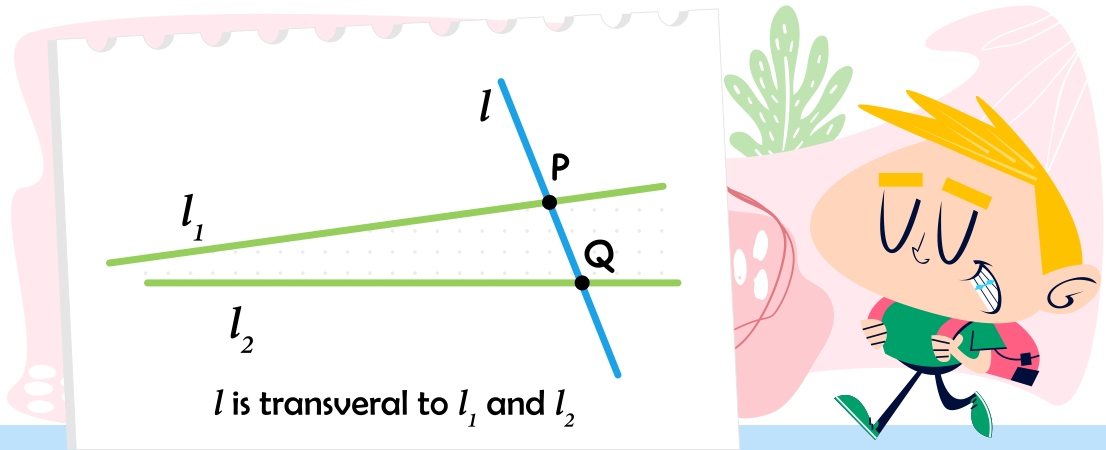
𝑙 is transversal to and
What are alternate interior angles?
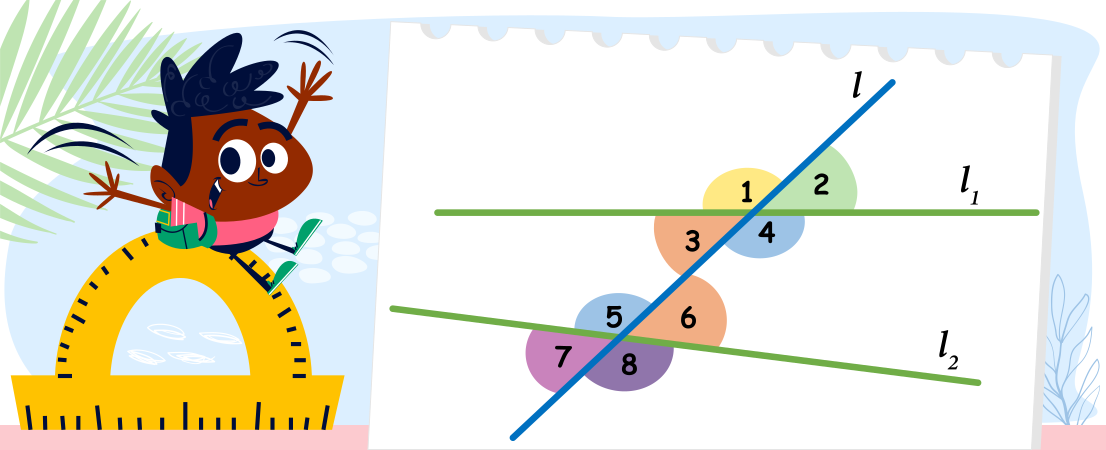
If and are two different lines, and is a transversal to and , then the points of intersection determine eight angles, as in the image below. We call two of these angles alternate interior angles if they are between and , and on different sides of the transversal.

In the image, angle 3 and angle 6 (the orange ones) are alternate interior angles because they are both between and , but on different sides of the transversal . Similarly, angle 4 and angle 5 (the blue ones) are alternate interior angles. Therefore, only two pairs, among those 8 angles, are alternate interior angles.
We know that you like real life examples, and also mega constructions! So, here we have one special example for you.
Example: The bars of the bridge railing in the image determine several pairs of alternate interior angles. Can you see them?

In order to find these angles, let us draw several lines of different colors on the image.
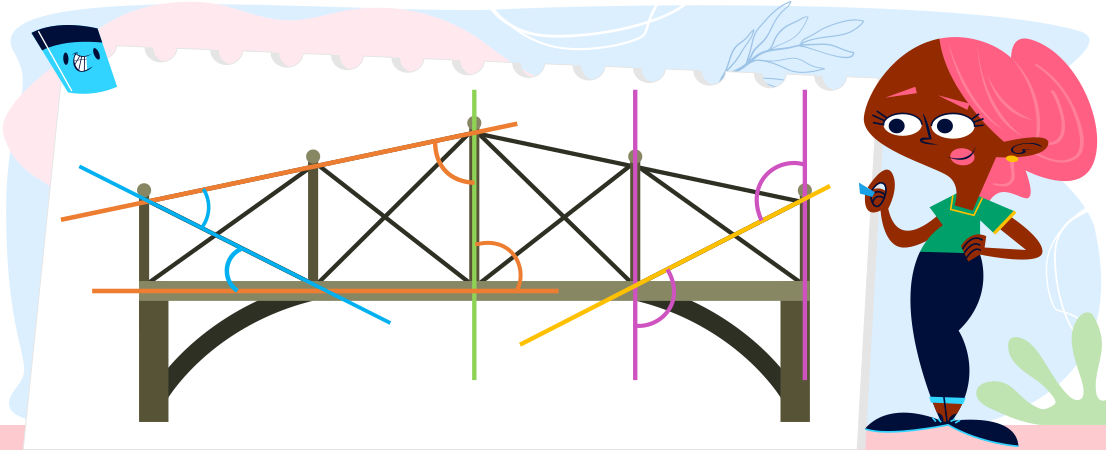
Notice that the blue line is transversal to the two orange ones, thus the two blue angles are alternate interior angles: they are between the two orange lines and on different sides of the blue line.
Similarly, the green line is transversal to the orange lines, which tells us that the orange angles are also alternate interior angles. Finally, the yellow line is transversal to the two violet lines, showing another pair of alternate interior angles: the violet angles.
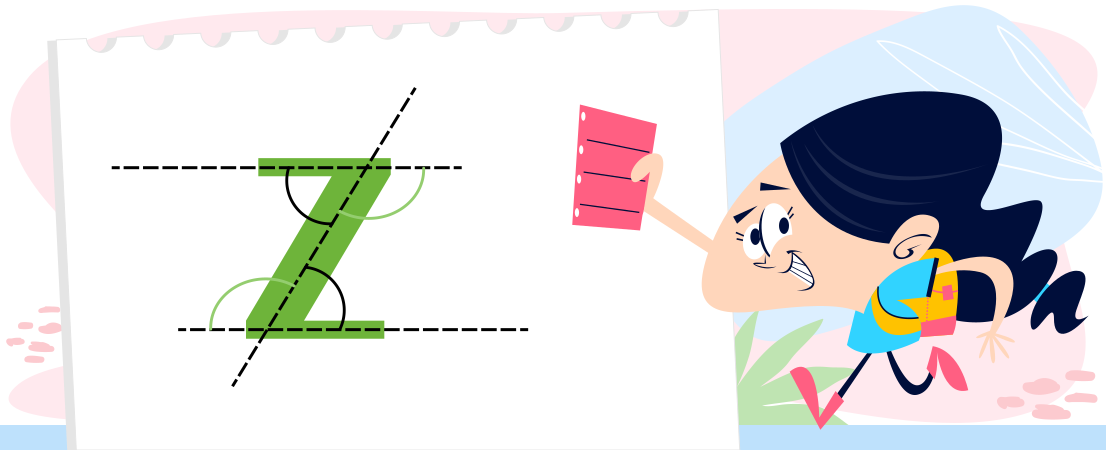
There are so many different types of angles, that sometimes it is difficult to remember which is which. But, we will give you a little trick to distinguish alternate interior angles: think on a Z!
Yes, the letter Z has two alternate interior angles (drawn in black on the image below). Also, their supplementary angles (the ones that complete a straight angle, drawn in green on the image) are alternate interior angles.
So, each time you find yourself searching for these angles, think on a Z!
Can you think of another letter that has alternate interior angles?
Let’s play with the alphabet!
In the image, we have all capital letters in the alphabet. Which of them determine alternate interior angles?

Well, first of all, that’s a lot of letters! So, let’s forget about some of them. We won’t find alternate interior angles in the blue letters, because they are curvy and therefore don’t have enough lines to define alternate angles.
The yellow letters are defined with only one or two lines, which are not enough to consider a transversal.
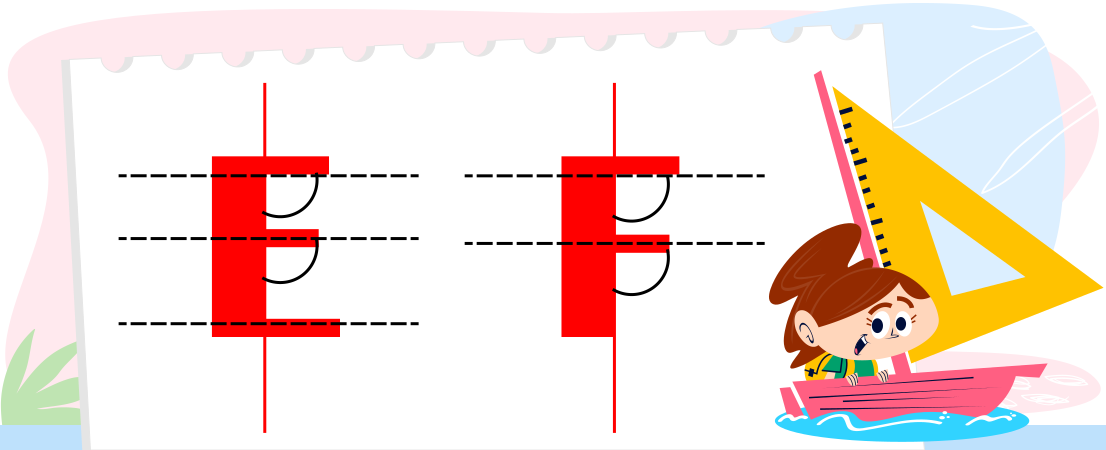
With the red ones, E and F, we can better understand the concept of “alternate angles”. First, let us draw, in the image below, all the lines that form the letters.
Notice that the transversal needs to be the red line, drawn on each letter because it is the only one that crosses the other two lines.
Then, the angles of these letters are on the same side of the transversal, meaning that they are not alternate angles. This is why E and F don’t determine alternate interior angles.
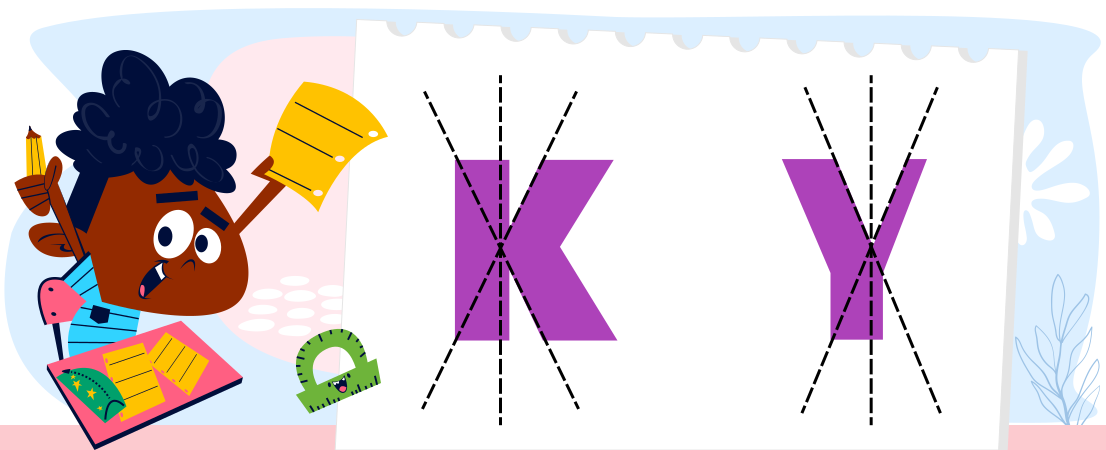
Let’s discuss the violet letters, K and Y, to better understand the concept of “transversal”. As we see below, both letters are defined by three lines, but none of these lines is transversal to the other two, why?
Because a transversal must intersect the other two lines at different points, but these three lines are intersecting in a single point.
Without transversal, there are no alternate interior angles in K and Y.
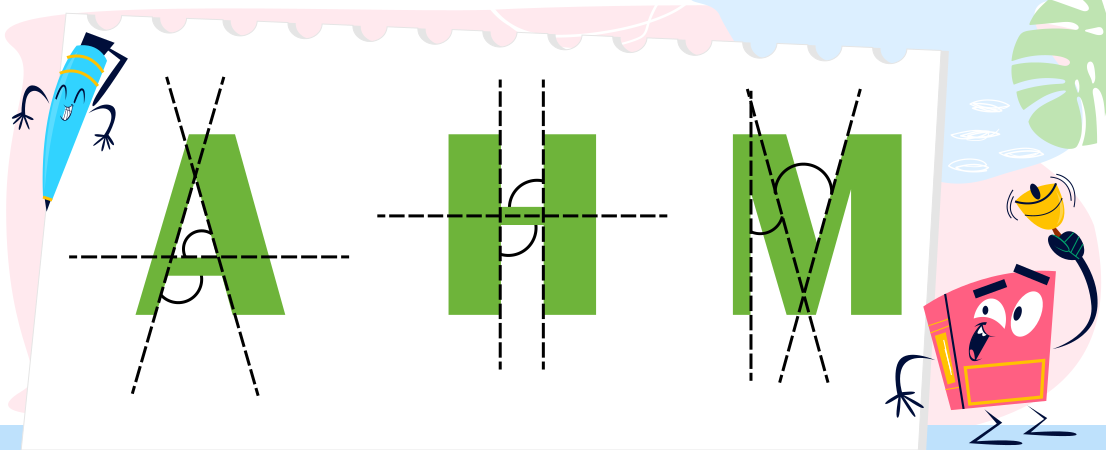
This leaves us the green letter s. Below, we show a pair of alternate interior angles in A, H, and M. We invite you to continue with the rest. This is only to remind you that in order to learn math, you need to practice a lot!
Alternate interior angles formed by parallel lines.
Notice that the alternate interior angles showed in A, in the previous example, seem to be of different sizes, while those in H seem to have the same measure. This is in fact true, and the reason why is that the two lines crossed by the transversal in H are parallel. The following rule ensures that this is a general fact.
Alternate Interior Angles Postulate: If a transversal line intersects two parallel lines, the alternate interior angles determined by them have equal measure.
In the image, and are parallel, therefore the measures of the blue alternate interior angles are the same. Also, the measure of the orange angles is the same.
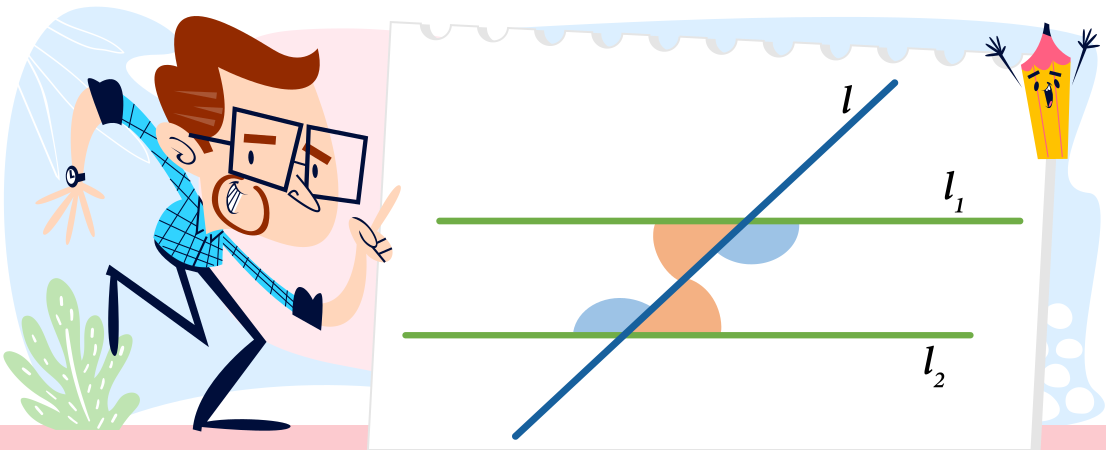
The converse of the postulate is also true: if a pair of alternate interior angles measure the same, then the lines intersected by the transversal are parallel.
Next, we will study several examples of how to apply the postulate and its converse.

Example: The pink lines on the ice cream cone of the image are parallel. The green line is transversal to the pink ones.
Thus, the green angles are alternate interior angles.
By the postulate, we have that the two green angles have the same measure. In fact, 7 other angles in the image measure the same as the green ones. Can you tell which ones? And why?
Example: The three drawn angles on the drum have the same measure. What information can we get about the drawn lines?

Notice that the black line from the right is transversal to the two white lines, thus two of the drawn angles are alternate interior angles with respect to these three lines. It follows, by the converse of the postulate, that the two white lines are parallel.
Similarly, we get that the two black lines are parallel, considering the white line from the left as transversal.
Example: Angle 2, drawn on the cell tower, is greater than angle 1. What does this say about the sidelines of the tower?

The drawn yellow line is transversal to the two lines that make the sides of the tower. Therefore, angle 1 and angle 2 are alternate interior angles.
Since angle 1 and angle 2 have different measures, the sides of the tower can’t be parallel. If the sides were parallel, the postulate would imply that the alternate interior angles measure the same.
This ensures that somewhere (at the top of the tower) the two lines that make the sides of the tower will meet.
We hope these examples were interesting and clarifying for you. We will finish with a summary of the topics that we have discussed today:
- Whenever we refer to a transversal, we are considering two other lines.
- A transversal intersects the other two lines at different points.
- In order to have alternate interior angles, we need to have a transversal.
- Alternate interior angles are those between the two lines and on different sides of the transversal.
- To distinguish alternate interior angles from other kinds of angles, we can think about the shape of the letter Z.
- When a transversal intersects two parallel lines, the alternate interior angles measure the same.
- If a pair of alternate interior angles have different sizes, then the two lines intersected by the transversal are not parallel.
Remember, we cannot learn math only from reading articles and watching videos, we need to practice! We invite you to solve the proposed problems, that we have left you on the way, to acquire more familiarity with the concept of alternate interior angles. You can also find interactive activities and worksheets on our website. We wish you a great journey through learning math!